My dog Calvin died this year. He was fifteen and losing his ability to move. The last time I saw him, he was responsive, yet it was clear he was increasingly uncomfortable in his body. He always lit up when he saw me; sadly, I think he was always thinking, “At last you’ve come home.” I was not.

In fact, I lost Calvin in my divorce over 10 years ago and, after a few years of occasional visits in Brooklyn, I stopped getting to spend regular time with him. I know we both missed each other. (I’ve had a number of dogs in my life; we got Beverley in 2015 and, when she does something I wish she wouldn’t, I remind her that she’s neither my first dog nor my last.)
I wrote two poems about Calvin, both of which appear in the anthology, Dogs Singing. One, in the voice of Calvin, recounts his origin story, based upon what we were told by the PASPCA. The other is not so much about Calvin as about my growing restlessness in the home of my previous marriage. Calvin serves as a character, if not a symbol, along with mining bees and a redbud tree.
Because Calvin was put down earlier this year, Emily Berry’s poem, “Dream of a Dog,” which appeared originally in Granta last February and in her most recent collection, Unexhausted Time, struck a particular chord in me when I read it. Berry’s poem appears about a quarter of the way through the book and, after a series of untitled poems, it is the first poem with a title in the book and closes the book’s first, unnumbered section. (As readers, poets always look for things like this in a collection; there is usually a significance to such placements, signaling an intention on the part of the poet, as if to say, “pay attention to this one.”)
It’s also one of the few poems in the collection where, in the words of critic Steven Lovatt, writing in The Friday Poem, “the tone is for once gentle, undemonstrative and open to outside impressions.” Berry’s work has always struck me as characterized by a so-called “flat style,” which Noreen Masud, in an article in the journal Textual Practice, explains “involves postures of poetic melodrama which state themselves ‘flatly’, without apology.”
Berry’s “Dream of a Dog,” while it does use a flat style, also consists of one long sentence, or rather a fragment of a sentence, for it ends not with a full-stop period, but an ellipsis. The ellipsis hints there is more to come or, perhaps, that the reader could circle back to the beginning of the poem for it ends where it begins, with the words, “My life” as if the poem could be an endlessly cycling dream.
It also causes me to question, is it the “dream of a dog,” as in, the speaker is dreaming of a dog (line 19 begins, “if I had a dog”) or is it a dream a dog is having, complete with its sighs. (My dog Beverley barks in her dreams, along with sighs, and chases things; I wish I knew what.)
Emily Berry is the author of three poetry books published by Faber in the UK: Unexhausted Time (2022), Stranger, Baby (2017) and Dear Boy (2013). You can read more about her and her work at: https://www.emilyberry.co.uk/
Here is her poem, “Dream of a Dog”:
Dream of a Dog
My life, and all our lives, I said sleepily,
so soft now, like the neck of a sleeping dog,
I lay my hand on it, as you have lain your hand
on mine (on my life), this tenderly, as the dog
noses deeper into sleep, as she sighs the way
a dreaming dog does, I wish my life was in
your dream, dog, I think it is, and she turns
onto her back so her stomach rises pale and
softly furred, and your words are travelling
through me, or, no, they travel over me, the
way a breeze makes fabric touch us, the fabric
of half-drawn curtains billowing from an open
window, as I pass and glance out on such
a day, the dog whimpering softly in sleep;
perhaps it’s that you say I should have faith,
or that you have faith, in increments, while
my shoes are nosing through leaves and the
dog is alert or disappears (but she comes back),
if I had a dog she would be a kind of faith,
I would lift her onto my shoulder, the points
of her ears very elfin and her face, serious,
tilted to regard you, she would listen and run
and then, from a distance, up a slight incline,
when I call her, look back, then run on,
and I do believe in increments, as when
the dog brings me, in her dream, pinecones,
when she wriggles in my arms, her ribcage
strung like an archer’s bow, when her paws
bend at the wrist in supplication, I do not see
the slow wheels in my blood turning, but
I ride them, I do not see what I know
and everything beneath that, which I may
come to know, or may not, the slow slow
discernment of the deep layer, air bubbles
rising from the dead zone, the dog in her
dream talismanic on a hilltop, the soft tips
of her ears in sleep, a slight sigh, all my life.
–Emily Berry, from Unexhausted Time

I stumbled across Martha Sprackland’s debut collection, Citadel, in Desperate Literature, a wonderful little bookshop off the Plaza Santo Domingo in Madrid last month. The poet, originally from Liverpool, now divides her time between London and Madrid, and she thanks the bookstore in the acknowledgments of her book. The collection intrigued me because of its size–a bit taller and thinner than the old City Lights paperbooks–and the paper wrapped around it proclaiming it as a staff favorite.
Inside, I found a captivating mix of poems that seemed to alternate between, as the back cover indicates, a “composite ‘I’–part Reformation-era monarch, part twenty-first century poet.” The monarch is Juana of Castile, “sixteenth-century Queen of Spain and daughter of the instigators of the Inquisition,” the so-called “Joanna the Mad.” The book was published in 2020 and shortlisted for the John Pollard International Poetry Prize in 2021, the Forward Prize for Best First Collection in 2020, and the 2020 Costa Poetry Award.
Cocido madrileño is a traditional stew from Madrid with meat and vegetables in a chickpea (garbanzo bean) base. I picked this poem to share because it is indicative of Sprackland’s gift for moving between the present and the past in this collection. I look forward to reading more of her work in the future.
Here is the poem in its entirety:
Cocido Madrileño
It was an unexplainable hunger, like a gravel pit,
and it wouldn’t go away. Sickness like a fingernail moon
around its darkness. Juana went to the bodega
and bought six tins of cocido ridged
like braziers, Litoral stamped in red along
the white coastline, the meats reclining
in an adoring harem of chickpeas.
Juana’s faith was on the wane but pork would prove it.
Morcilla, chorizo, tocino de ibérico, panceta,
soft white lard and blood and bone and smoke
tipped over the lip and into the pit, like a body
she desperately wanted to be rid of.
This, she believed, would sate her, save her.
–Martha Sprackland, from CITADEL
Learn more about the poet: Martha Sprackland
Click here to purchase Citadel directly from the publisher, Liverpool University Press.
My Year in Writing: 2022
November 28, 2022
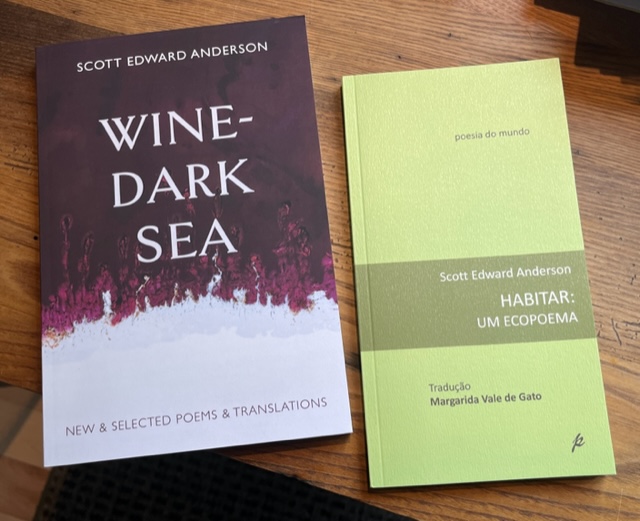
Now is the time, between my birthday and the end of the year, when I take stock of my year in writing. It’s been a pretty productive year, considering it also included a move from Brooklyn to the Berkshires:
Published Wine-Dark Sea: New & Selected Poems & Translations (Shanti Arts)
Book launch for Wine-Dark Sea online with Kathryn Miles (Feb)
Appearance on Portuguese American Radio Hour with Diniz Borges (March)
World Poetry Day/Cagarro Colloquium reading (March)
Book launch with Portuguese Beyond Borders Institute (March)
Book signing at Terrain.org booth at #AWP22 in Philadelphia (March)
Wine-Dark Sea gets “Taylored” by @taylorswift_as_books on Instagram! (March)

Lecture at University of the Azores: Mesa-redonda Poesia, Tradução e Memória (April)
Azores launch for Wine-dark Sea and Azorean Suite/Suite Açoriana at Letras Levadas in Ponta Delgada, São Miguel, Azores, with Leonor Sampaio Silva (April)
Açores Hoje television interview with Juliana Lopes on RTP Açores (April)
Terrain.org Reading Series with Joe Wilkins and Betsy Aoki (April)
“Phase Change” and “Under the Linden’s Spell” reprinted in TS Poetry’s Every Day Poems (online/email)
“Midnight Sun” and “Shapeshifting” reprinted in Earth Song: a nature poems experience (anthology), edited by Sara Barkat and published by TS Poetry Press
Named Ryan Observatory’s first Poet Laureate
Mentored 2 students in Creative Nonfiction for Adroit Journal Summer Mentorship Program (June/July) [UPDATE: one of the students I mentored got accepted into the University of Pennsylvania, early decision! So proud of her!]
Translated Pedro da Silveira’s A ilha e o mundo, his first book of poems (1952)
Excerpts from Corsair of the Islands, my translation of Vitorino Nemésio’s Corsário das Ilhas, published in Barzakh Magazine (online) (August)
Panelist/presenter at Colóquio: Pedro da Silveira – faces de um poliedo cultural, University of the Açores: On Translating Pedro da Silveira’s A Ilha (September)
Lançamento da obra Habitar: um ecopoema, Margarida Vale de Gato’s translation of Dwelling: an ecopoem, published by Poética Edições, with Nuno Júdice, Luís Filipe Sarmento, and Margarida Vale de Gato, at FLAD in Lisbon (September)
Guest lecturer in Creative Writing at University of the Azores (Leonor Sampaio Silva, professora)
Panelist/presenter at 36th Colóquio da Lusofonia, Centro Natália Correia, Fajã de Biaxo, São Miguel, Azores: reading from Azorean Suite/Suite Açoriana with Eduardo Bettencourt Pinto (October)
#YeahYouWrite Catskill Reading at Fahrenheit 451 House, Catskill, NY w/Stephanie Barber, Laurie Stone, and Sara Lippmann (October)
Guest Writer at UConn Stamford creative writing class (Mary Newell, professor) (October)
Poet & Astronomer in Conversation (with Derrick Pitts, Chief Astronomer of the Franklin Institute) at Ryan Observatory at Muddy Run, PA (November)

“Wine-Dark Sea” (poem) published in American Studies Over_Seas (November)
20th Anniversary of residency at Millay Arts and writing of Dwelling: an ecopoem (November) [UPDATE: Got asked to join the Board of Millay Arts in December.]
Selections from Habitar: um ecopoema published in Gávea-Brown (US) and Grotta (Azores)
Book reviews in Gávea-Brown and Pessoa Plural [Postponed until 2023.](December)
My essay, “Açorianidade and the Radiance of Sensibility,” accepted by Barzakh Magazine for publication in Winter 2023 issue. (December)
What a year! I am exceedingly grateful to everyone who has supported my writing over the past year. As Walter Lowenfels wrote, “One reader is a miracle; two, a mass movement.”
Like I said last year, I feel like I’ve been blessed by a mass miracle this year!
Tonight at Ryan Observatory: Art Meets Science
November 5, 2022

Tonight @ 7PM ET!
In person at Ryan Observatory at Muddy Run or live stream via https://www.ryanobservatory.com/
Join us for a lively dialogue between Chief Astronomer of the Franklin Institute, Dr. Derrick Pitts & Ryan Observatory Poet Laureate, Scott Edward Anderson.
Our conversation will center on the many ways art and science enhance and complement each other.
Telescope viewing & laser guided star tours, weather permitting. Rain or Shine event.
For more info, go to https://www.ryanobservatory.com/
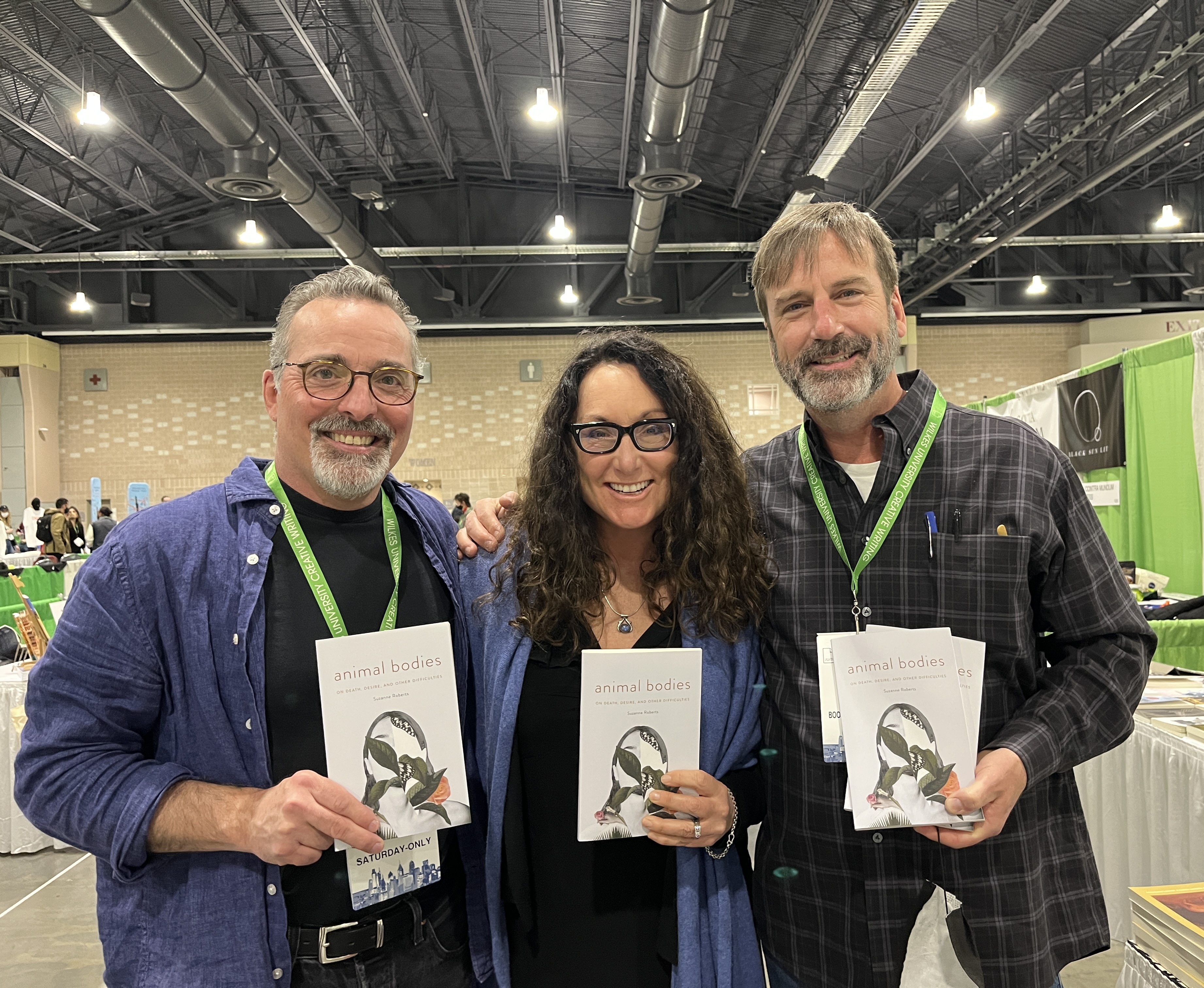
Tonight, I’m reading from my new book, Wine-Dark Sea: New & Selected Poems & Translations in Terrain.org’s reading series. You can join us by registering here for the event. Hope to see you there!
I’ll be reading with two other poets, Joe Wilkins and Betsy Aoki. Betsy is an associate poetry editor with Terrain, which has published several of my poems over the years. Her colleague, Derek Sheffield, will be our host. Derek is a fine poet in his own right, and he has a new book out called Not For Luck, which poet Mark Doty selected for the Wheelbarrow Books Poetry Prize, and it was published by Michigan State University Press.
Derek has been called “a post-romantic nature poet,” in a recent review and, as the reviewer went on to say, his “poems are colored by a sense of separateness from nature and a recognition that language itself impedes any immediate communion with the world.” (Those of you familiar with my book Dwelling: an ecopoem, will understand why I find Derek’s work interesting and simpatico.)
I should also mention that he wrote a great blurb for my new book, for which I am truly grateful. And he has some of the longest poem titles I’ve ever seen (the one below is not even close to the longest), which is always fun.
Here is Derek Sheffield’s
“At the Log Decomposition Site in the H.J. Andrews Experimental Forest, a Visitation”
Below thick moss and fungi and the green leaves
and white flowers of wood sorrel, where folds
of phloem hold termites and ants busily gnawing
through rings of ancient light and rain, this rot
is more alive, says the science, than the tree that
for four centuries it was. Beneath beetle galleries
vermiculately leading like lines on a map
to who knows where, all kinds of mites, bacteria,
Protozoa, and nematodes whip, wriggle, and crawl
even as my old pal’s bark of a laugh comes back:
“He’s so morose you get depressed just hearing
his name,” he said once about a poet we both liked.
Perhaps it’s the rust-red hue of his cheeks
in the spill of woody bits. Or something in the long shags
of moss draping every down-curved limb. He’d love to be
right now a green-furred Sasquatch tiptoeing
among the boles of these firs alive since the first
Hamlet’s first soliloquy. He’d be in touch,
he said in an email, as soon as the doctors cleared him.
When this tree toppled, the science continues, its death
went through the soil’s mycorrhizae linking the living
and the dead by threads as fine as the hairs appearing
those last years along Peter’s ears, and those rootlets
kept rooting after. That email buried in my Inbox.
Two lines and his name in lit pixels on my screen.
What if I click Reply? That’s what he would do,
even out of place and time, here in the understory’s
lowering light where gnats rescribble their whirl
after each breath I send.
–Derek Sheffield, from Not For Luck, originally appeared in Otherwise Collective’s Plant-Human Quarterly
National Poetry Month 2022, Week Three: Millicent Borges Accardi’s “The Graphics of Home”
April 20, 2022
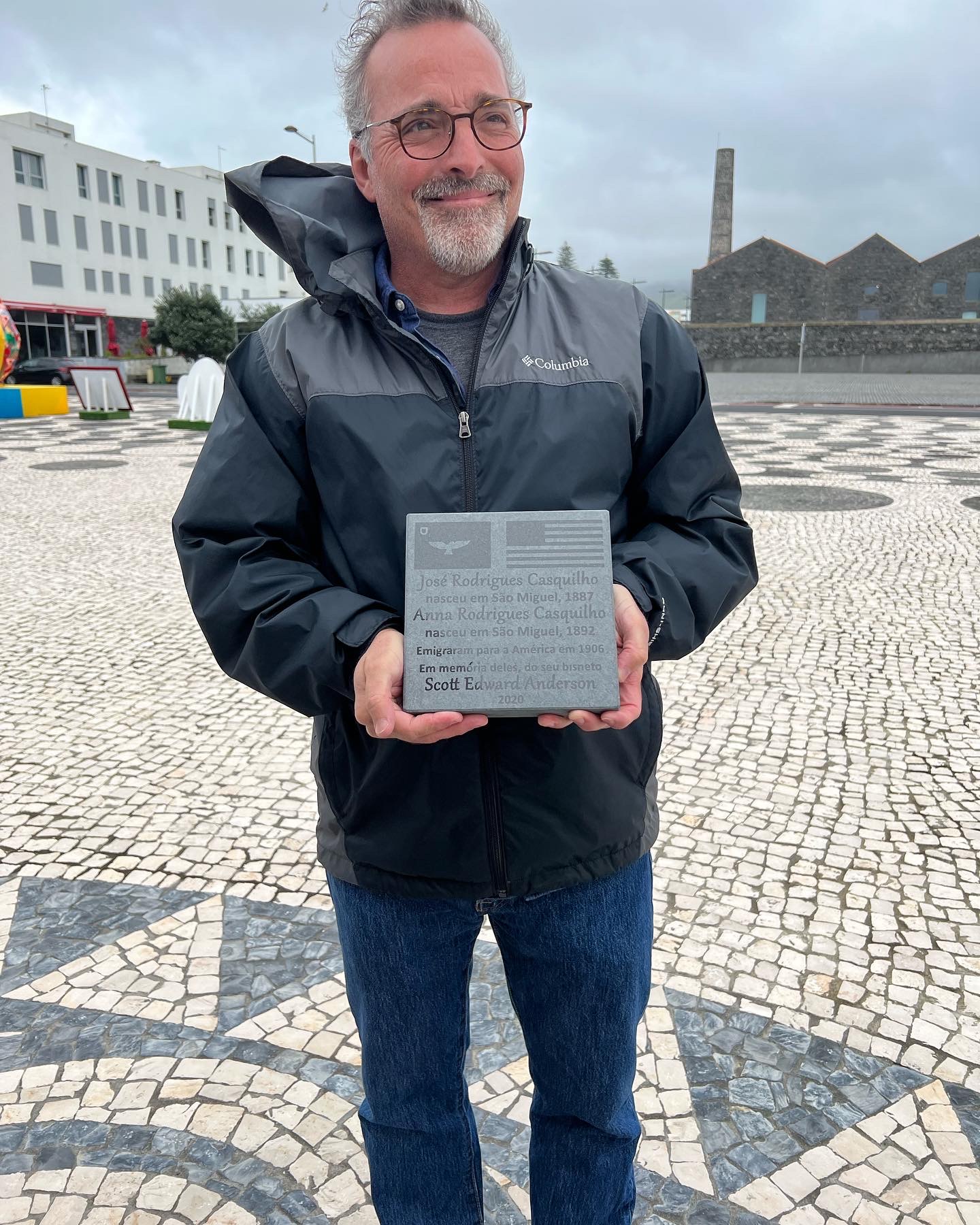
When Samantha and I were back in São Miguel two weeks ago, I had the opportunity to place a plaque at Emigrant Square in honor of my great-grandparents José and Anna Rodrigues Casquilho, who emigrated from the Azores in 1906. As the wind whipped up on the plaza, swirling around the large mosaic globe, and the ocean waves crashed against the rocky north shore, I had the distinct impression my bisavós were making their presence known.
The ceremony was emotional for me, especially because several members of my Azorean family attended. I delivered a speech in Portuguese—although much of it may have been lost on the wind—and placed the plaque in the square that had been reserved for it. I couldn’t help thinking of my bricklayer great-grandfather when I nestled the plaque into the fresh mortar.
(Coincidentally, outside Letras Lavadas Livraria the night before, where we were launching my books Azorean Suite and Wine-Dark Sea, stone workers were busy replacing the basalt and limestone calçadas and street paving stones right up until we started talking—another sign that my great-grandfather was present.)
This got me thinking about other emigrants from the islands and about Millicent Borges Accardi’s new book of poetry, Through a Grainy Landscape, which, as another Azorean American writer, Katherine Vaz, puts it, explores “what heritage means to those descended from immigrants long established in the place of their dreams.”
Accardi’s books include Only More So (Salmon Poetry, 2016) and she has received a Fulbright, along with fellowships from the National Endowment for the Arts (NEA), CantoMundo, the California Arts Council, Yaddo, Fundação Luso-Americana (FLAD), and the Barbara Deming Foundation. She lives in Topanga, California, and has degrees in writing from CSULB and USC. In 2012, Accardi started the “Kale Soup for the Soul” reading series featuring Portuguese-American writers.
Here is Millicent Borges Accardi’s “The Graphics of Home”
Were broken by the Great
Depression, the textile mills,
and the golf ball factories.
We came from The Azores
and the mainland and Canada,
settling in Hawaii and New Bedford
and San Pedro, the original
Navigators. No one was documented.
Here was what I learned at home
thru the lifecycle of a shirt.
Polyester and cotton, it arrived
in the mail, from Sears,
sent as a hand-me-down
from Fall River, carefully washed
and ironed and pressed,
in a tomato box that had been
repurposed and wrapped in brown
paper and smelling of stale
cigarettes. That shirt was worn
and washed and used many times,
as if it had been new. When they
frayed, the elbows were mended
and torn pockets were reconnected
with thick carpet-makers’ thread.
When the sleeves were too worn
to restore, they were scissored
off to make short sleeves and then
the new ends were folded and hemmed
until no more and then there was the time
when the sleeves were cut off
entirely, to create a summer top
or costume for play time, sleeveless,
perhaps a vest for a pirate.
When outgrown and too worn
for even that, the placket of buttons was removed,
in one straight hard cut along the body
of the shirt front, through and through.
The buttons were pulled off by hand,
for storage in an old cookie tin,
the cloth cut into small usable pieces
for mending, for doll clothes, for
whatever was left over. The rest, torn
into jagged rags for cleaning and, if the fabric was soft,
used for Saturday’s dusting of the good furniture
in the den. Whatever was left, was sold
by the pound, wrapped and rolled into
giant cloth balls, sold to the rag man
who made his rounds in the neighborhood
all oily and urgent and smiling as if
his soul were a miracle of naturalized
birth.
From Through a Grainy Landscape by Millicent Borges Accardi, New Meridian Arts (2021)

Photo by Ana Cristina Gil, University of the Azores.
My apologies for not being on top of my game with regards to National Poetry Month Mailings this year. Samantha and I just returned from an emotional trip to our beloved island of São Miguel, in the Azores, after two years away.
It was emotion-filled not only because the pandemic kept us way for two years—we had tried to go back as recently as December, but Omicron dissuaded us—but because in the interim years we had determined that we want to divide our time between there and our new home in the Berkshires and this trip solidified and confirmed that plan.
On top of that, we held a ceremony to place a plaque at the Praça do Emigrante (Emigrant Square) honoring the memory and sacrifice of my two great-grandparents who emigrated from the island in 1906. Joining us were cousins from my family there, the Casquilho family, along with the director and staff from the Associação dos Emigrantes Açorianos.
It was a windy afternoon, and the waves were crashing against the rocky shore along the north coast of the island, as if the spirit of my great-grandparents were making their presence known.
All this to say that I’m behind in my weekly mailings and I apologize. This week, I’m going to share post one of my translations of the great Azorean poet Vitorino Nemésio, “Ship,” which I hope you will enjoy. It originally appeared in Gávea-Brown Journal and was reprinted in my new book, Wine-Dark Sea: New & Selected Poems & Translations. Here it is in the original Portuguese and in my translation:
Navio
Tenho a carne dorida
Do pousar de umas aves
Que não sei de onde são:
Só sei que gostam de vida
Picada em meu coração.
Quando vêm, vêm suaves;
Partindo, tão gordas vão!
Como eu gosto de estar
Aqui na minha janela
A dar miolos às aves!
Ponho-me a olhar para o mar:
—Olha-me um navio sem rumo!
E, de vê-lo, dá-lho a vela,
Ou sejam meus cílios tristes:
A ave e a nave, em resumo,
Aqui, na minha janela.
—Vitorino Nemésio, Nem Toda A Noite A Vida
___
Ship
My flesh is sore
from the landing of some birds
I don’t know where they’re from.
I only know that they, like life,
sting in my heart.
When they come, they come softly;
leaving, they go so heavy!
How I like to be
here at my window
giving my mind over to the birds!
I’m looking at the sea:
look at that aimless ship!
And, seeing it, give it a lamp[i],
or my sad eyelashes:
the bird and the ship, in a nutshell,
here, at my window.
—translated from the Portuguese by Scott Edward Anderson
[i] For “vela,” I like “lamp” here, rather than “candle” or “sail,” because it echoes the idea of lighting a lamp to draw in a weary traveler—although I think “salute” or “sign” might also work, although not technically accurate. Also “lamp” hearkens back to Nemésio’s stated desire, expressed in his Corsário das Ilhas, which I’ve been translating for Tagus Press, of wanting to be a lighthouse keeper.

I’m behind in posting this year’s National Poetry Month poems, and I was reminded of that fact by several readers who reached out wondering whether they’d fallen off the list. My apologies!!
We finally made it back to the Azores after two years away and I’ve been busy preparing for a lecture I am giving at the University of the Azores this evening (as I write this) and a book launch event at the bookstore of my Azorean publisher, Letras Lavadas, in Ponta Delgada on Thursday.
Still, no excuse.
Then, this morning, I saw Dana Levin’s poem below, posted by several friends on social media from its appearance in the New York Times Magazine this week, and—given recent events in Ukraine and Sacramento—I decided it was the poem to start with this year.
Dana Levin is a national treasure. Her poetry is both erudite and approachable, a rich combination of everyday observations, science, and deep human feeling.
Dana grew up in California’s Mojave Desert, earned a BA from Pitzer College and an MA from New York University. Her collections of poetry include Banana Palace (2016), Sky Burial (2011), Wedding Day (2005), and In the Surgical Theatre (1999). She teaches at Maryville University in St. Louis, where she is distinguished writer-in-residence.
Here is Dana Levin’s poem, “Instructions for Stopping,” from her new book, Now Do You Know Where You Are, out now from Copper Canyon Press.
Instructions for Stopping
By Dana Levin
Say Stop.
Keep your lips pressed together
after you say the p:
(soon they’ll try
to pry
your breath out—)
—
Whisper it
three times in a row:
Stop Stop Stop
In a hospital bed
like a curled-up fish, someone’s
gulping at air—
How should you apply
your breath?
—
List all of the people
you would like
to stop.
Who offers love,
who terror—
Write Stop.
Put a period at the end.
Decide if it’s a kiss
or a bullet.
—
Here’s how it appeared in the New York Times Magazine on Sunday: Insructions for Stopping.
WINE-DARK SEA BOOK LAUNCH & READING
March 2, 2022
In conversation with Kathryn Miles
On #pubday eve, Kathryn Miles and I got together to chat about my new book, Wine-Dark Sea: New & Selected Poems & Translations. We had a wide-ranging conversation about the book, specific poems, finding love at middle age, the idea of home, and the Azores — and I even read a poem in Portuguese.
Have a look here:
The book came out March 1st and is available through the links on my website: scottedwardanderson.com/wine-dark-sea
My Year in Writing: 2021
November 24, 2021

Now is the time of year, between my birthday and the end of the year, when I take stock of my year in writing.
What a year it’s been, deepening my connections to my ancestral homeland of the Azores, as well as my ties to the diaspora throughout North America. Here we go:
- Signed contract with Shanti Arts for Wine-Dark Sea: New & Selected Poems & Translations to be published in Spring 2022. (Technically signed this at the very end of 2020, but thought it was worth mentioning again.)
- Published “Five Poems by Vitorino Nemésio” in my English translations in Gávea-Brown: A Bilingual Journal of Portuguese-North American Letters and Studies.
- Interview and review by Esmeralda Cabral appeared in Gávea-Brown and was later translated into Portuguese by Esmeralda and Marta Cowling and appeared in Diário dos Açores.
- Published four translations by Margarida Vale de Gato from Dwelling in Colóquio/Letras by the Gulbenkian Foundation. And signed contract with Poética Edições for Habitar: uma ecopoema, translation by Margarida of my book Dwelling: an ecopoem. Received funding for Margarida’s translation from FLAD.
- Associação dos Emigrantes Açorianos AEA video presentation, “Açores de Mil Ilhas” for World Poetry Day.
- Azorean Suite/Suite Açoriana review by Maria João Covas (video); and translation of Vamberto Freitas’s (2020) review published in Portuguese-American Journal.
- Wrote a poem in português for Letras Lavadas’s celebration, Dia Internacional da Mulher. Here is the video presentation, which includes the fabulous Aníbal Pires reading my poem, “A outra metade do céu/The other half of the sky.”
- Talk for New Bedford Whaling Museum on “Azorean Suite: A Voyage of Discovery Through Ancestry, Whaling, and Other Atlantic Crossings”
- Dwelling featured in a class at Providence College on Environmental Philosophy, thanks to Professor Ryan Shea; spent a week there, including teaching three classes and giving a reading/talk at the PC Humanities Forum.
- Readings: RONDA: Leiria Poetry Festival (March); Filaments of Atlantic Heritage (March), Cravos Vermelhos Oara Todos os Povos/World Poetry Movement Reading (April); A Nova Revolução dos Cravos (April), Cagarro Colloquium—Azores Day & launch (May); ASLE Spotlight Series (June); Juniper Moon’s Sunday Live reading series (August), LAEF Conference/PBBI (October); and A Voz dos Avós Conference/PBBI (November). Phew, I’m exhausted just writing that schedule!
- Translated poems by Luís Filipe Sarmento, Ângela de Almeida, and Adelaide Freitas.
- Panelist for PALCUS on Embracing Modern Portuguese Culture (spoke about Cagarro Colloquium, translation, etc.).
- Participated in “Insularity and Beyond: The Azores & American Ties” webinar with University of the Açores.
- Participated in session with Margarida Vale de Gota’s translation students at University of the Lisbon via Zoom.
- Recorded a video—em português—for Letras Lavadas’s second anniversary of bookstore in PDL
- Finished a draft of my translation of Vitorino Nemésio’s Corsário das Ilhas and revisions corresponding to new (2021) Portuguese edition.
- Published my talk from PC Humanities Forum in Gavéa-Brown.
- Published “Wine-Dark Sea” (poem) in America Studies Over_Seas.
- Published two poems, “The Pre-dawn Song of the Pearly-eyed Thrasher” and “Under the Linden’s Spell,” in The Wayfarer.
- Published “Phase Change” (poem) in ONE ART (online poetry journal).
- Scrapped portions of my work-in-progress, The Others in Me, after consulting with two writer friends about it, but found a new approach through working with Marion Roach Smith, which I will start in 2022…
What a year! I am exceedingly grateful to everyone who has supported my writing over the past year. As Walter Lowenfels wrote, “One reader is a miracle; two, a mass movement.” I feel like I’ve been blessed by a mass miracle this year!
 Scott Edward Anderson
