Visions Coinciding: Celebrating Elizabeth Bishop’s Centenary
December 5, 2011

Elizabeth Bishop photo from Louise Crane Papers, Beinecke Library.
As readers of this blog know, 2011 marks the centenary of Elizabeth Bishop’s birth. I’ve been trying to celebrate it in as many ways as possible and get to some of the events throughout the year, as well as visiting her grave in Worcester, MA, and promoting her work on this blog and on Twitter by using #EB100.
Last week I attended Visions Coinciding: An Elizabeth Bishop Centennial Conference, organized by NYU’s Gallatin School and the Poetry Society of America.
The conference featured interdisciplinary responses to Bishop and her work, including a slide show and talk by Eric Karpeles exploring rarely seen images of Elizabeth Bishop and a screening of footage from Helena Blaker’s forthcoming documentary on Bishop’s years in Brazil.
The screening was followed by a discussion moderated by Alice Quinn, editor of Bishop’s posthumous collection Edgar Allen Poe & The Juke-Box: Uncollected Poems, Drafts, and Fragments
Day two featured two lectures on Bishop’s relationship with Art. Peggy Samuels gave a fascinating exegesis of Bishop’s interest in and influence by the work of Kurt Schwitters and William Benton displayed slides of Bishop’s own paintings, sharing his insights on their context in modern art.
Jonathan Galassi moderated a lively discussion with the editors of recent collections of Bishop’s poetry, prose and correspondence, including Joelle Biele (Elizabeth Bishop and The New Yorker


All this was followed by a reading by NYU Gallatin students who each read a Bishop poem and one of their own by way of response and, finally, a star-studded lineup of contemporary American poets, including John Koethe, Yusef Komunyakaa, and Mark Strand reading poems by Bishop.
Poet Jean Valentine read Bishop’s translation of Octavio Paz’s “Objects & Apparitions” with the original read by Patrick Rosal. Maureen McLane read from her creative work-in-progress “My Elizabeth Bishop; My Gertrude Stein.”
This week is the opening of Elizabeth Bishop: Objects & Apparitions at the Tibor De Nagy Gallery in New York. The show comprises rarely exhibited original works by Bishop, including watercolors and gouaches, as well as two box assemblages inspired by the work of Joseph Cornell.
The exhibition also includes the landscape painting Miss Bishop inherited and that she wrote about in “Poem,” which begins
About the size of an old-style dollar bill,
American or Canadian,
mostly the same whites, gray greens, and steel grays
-this little painting (a sketch for a larger one?)
has never earned any money in its life.
Unfortunately, I’m going to miss the exhibit of her papers at the Vassar College Main Library, From the Archive: Discovering Elizabeth Bishop, which is on view until December 15th.
But there’s still time to celebrate Bishop’s centenary — until her 101st on February 8, 2012.
Juvenilia: “Snow Sleeping November”
November 19, 2011

Painting by Lisa Hess Hesselgrave, November 2002
JUVENILIA
1: compositions produced in the artist’s or author’s youth
2: artistic or literary compositions suited to or designed for the young
Origin of JUVENILIALatin, neuter plural of juvenilisFirst Known Use: 1622
As the Wikipedia entry for Juvenilia explains: “the term was first used in 1622 in George Wither‘s poetry collection Ivvenilia. Later, other notable poets, such as John Dryden and Alfred Lord Tennyson came to use the term for collections of their early poetry. Jane Austen‘s earlier literary works are also known by the name of Juvenilia. An exception to retrospective publication is Leigh Hunt’s collection Juvenilia, first published when he was still in his teens.”
One of my earliest extant poems, written when I was 15, came to my attention recently. The poem is called “Snow Sleeping November.” I was surprised by its language and resonance, although some of it seems over-written and bears too heavy an influence of Whitman, Frost, Hopkins, and perhaps Stephen Crane.
I can still see the cabin in New York’s Finger Lakes that provided its inspiration.
Here is my poem,
“Snow Sleeping November”
I realize the briskness of this November eve,
the quiet, complacency of stiff snow,
the darkness of full‑breasted snowclouds,
all of us retaining warmth
like soapstone.
My cup is full of hot water
the wood in the fire
gleams like cat’s eyes & gives-off a
sun‑like warmth‑‑radiant, welcoming.
Short days & long, frozen nights,
girding my boots
for the crisp winterchill,
wind driving drafts up my nose.
The sparkling, icy water
and trees stiff in the dead weight
of snow‑leaden branches.
Poets crawling at the clouds
pulling snow groundfast‑‑
Those November trees!
–Scott Edward Anderson
The painting is a sketch by my friend Lisa Hess Hesselgrave from my personal collection. You can see more work by Lisa at LisaHesselgrave.com
 Writing for posterity may be as old as writing itself. Poets, novelists, essayists, and philosophers all write with the hope that their work will survive them — even if they deny it — living on to touch new readers in distant ages.
Some writers never lived to see their work gain an audience or even a small, devoted readership. Some, like Robert Browning, obsessed about it.
Alas, the quote from Walter Lowenfels that adorns this blog is a daily reminder to me of the fate of almost all of us.
How much of our writing will survive, will last, will live to find readers throughout our lifetime and beyond?
I was struck by this question twice this week.
The first was Tuesday night, having dinner with twin brother poets Dan and David Simpson. We were talking about the fact that none of the three of us had published collections of our work, despite “success” placing individual poems in journals and magazines, and the awards and accolades we’ve received over the years.
David told of an encounter with a writing mentor who reviewed his draft manuscript. The mentor suggested they each go through the script and rate the poems numerically: 1, 2, 3; then they would compare the results and see what came of it.
My friend was dumbfounded that the mentor found so few 1s among the collection — really only a few — and only a few 2s as well. The 3s weren’t even worth mentioning and probably should be discarded, suggested the mentor.
Bruised as David’s ego was by the experience, I found some solace in it.
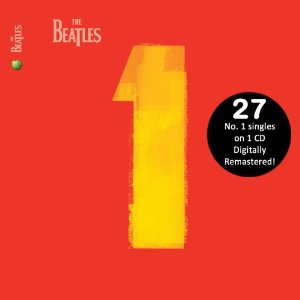
“How many #1 singles did The Beatles have?” I asked David. (27 is the answer.)
“So, okay, we can agree that none of us are The Beatles,” I offered. “But we could be, say, The Guess Who.” (That group had only had one number 1 single, “American Woman,” for three weeks May 9 -29, 1970, yet we all know the song and you probably have it streaming in your head right now at its mere mention.)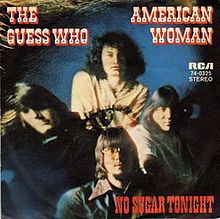
We agreed that we would be lucky to have one “hit” poem continue to be read by people after our deaths. We’d be delighted if a handful survive us, yet it’s helpful to have some perspective.
A few days later I received a request for permission to reprint a piece of writing I did in 1993. This is the most widely reprinted thing I’ve written and, I’m afraid, will likely survive any and all of my creative work.
The piece is a review of N. Scott Momaday‘s In the Presence of the Sun: Stories and Poems, 1961-1991
It’s even been made available for students on such services as eNotes: Scott Edward Anderson (review date 1993).
I re-read the piece this morning — it’s not a bad piece of writing, as reviews go, and certainly lives up to eNotes’ description: “Anderson provides a thematic and stylistic review of In the Presence of the Sun.”
Yet, when I wrote the review, I never imagined it would be my most cited, most reprinted, perhaps even my most read piece of writing.
If only the strong survive may this piece rock on.


Kurt Cobain and Krist Novoselic by P.B. Rage
I like to listen to music when I’m making pizza. Loud music, usually cranked up as high as my computer’s external speakers will allow.
Last night, it was Nirvana’s “Nevermind,” which recently celebrated 20 years in the collective listening consciousness.
My 15-year-old son wandered into the kitchen while the last song (the hidden track), “Endless, Nameless,” filled the kitchen with sonic noise.
“What the heck is that?” he asked.
“Nirvana,” I answered, although I always thought that track sounded more like my old band Active Driveway than the rest of Nevermind.
“What’s so great about them?” he asked. I switched to the opening track, their breakthrough song “Smells Like Teen Spirit.”
“Yeah, that is good,” he admitted. Then we talked about how Kurt Cobain committed suicide.
“Shotgun.”
He wanted to know why he did it. “Sometimes geniuses are so troubled they can’t cope with the pressures of life.”
Then I told him that a friend of mine, Peter Boyle, also killed himself with a shotgun five years before Cobain. Peter was an artist, too, deeply troubled — tortured even — and, like Cobain, addicted to heroin. Peter shot himself in the barn at his family’s farm; he was 37 years old. Cobain was 27. I won’t go into the significance of those ages, but you can read more here.
Peter was an amazing artist who worked in a very unusual medium: sugar. In fact, he wrote the book on blown and pulled sugar sculpting techniques, which came out the year before he died. His work had just been featured in a show, ”The Confectioner’s Art,” at the old American Craft Museum (November 1988-January 1989) in New York.
Peter tried to kill himself at least once before, that I knew about, while trying to quit heroin cold turkey. I intervened that time and suffered with him through a long night of his own personal Hell.
I wrote a poem about Peter and his suicide a some time later called “The Cartographer’s Gambit.” I changed the subject from a sugar sculptor to a cartographer; I’m not sure why, but it seemed to work.
Here is my poem, “The Cartographer’s Gambit”:
In the spindrift,
he outlines an island
for which there are no visas—
whose mapping is all too delectable,
whose charting is measured intensity.
Along these shores,
he conjures ochre bluffs, which resemble
well–turned ankles, the cleft of breast in a covescape,
and hillsides of amber light.
These are things he brought to life on paper, restless for rescue.
The uncharted territory
still gleaming in his eye—
a coastal mystery.
He lumbers, cools with the injection.
The seaboard nearly finished, dry land
his last frontier.
He reads Celine as open waters dry,
the cold spring chills him, he smokes a cigarette.
Deep within his blood, a fine line beckons—
with perfect geography.
Outside, the air is perfumed,
with a scent of powder.
Starlings prattle above him,
black, iridescent, oxymoronic:
a thousand triangles
of gun metal
fusing a jade sky.
Their opacity blinds him to reason.
Unable to move latitudinal or long,
he measures the scale of possibility,
sights his compass on true north and,
as the needle riddles the vein,
he dashes the coast with blue.
(In memoriam: Peter T. Boyle, 1952-1989)
–Scott Edward Anderson
“Midnight Sun” and Anon, the anonymous submissions magazine
September 17, 2011
 I first became aware of the Scottish poetry journal Anon through some of the poets I follow on Twitter (most of whom I’ve included in my poetry list, which you can follow too here.
Anon is edited by poet and social media producer Colin Fraser and Peggy Hughes, who works at the wonderful Scottish Poetry Library.
One cool thing about Anon is its format, which is reminicent of those old Penguin Classic paperbacks. The other is its completely anonymous submissions process.
The editors do not know the names of the poets whose work they are considering — and they never know the names of the poets they are rejecting. As the Anon tagline proudly proclaims it, “We don’t care who you aren’t…”
I submitted a few poems to the magazine last year, including one poem I’d written in Alaska over a dozen years before called “Midnight Sun.” The poem got picked and appeared in Anon 7.
Here’s what one reviewer, writing in the journal Sabotage, said about that issue of Anon:
“Anon Seven is an effervescent production, its poems spanning the world: from Dave Coates’ transfigured, strangely threatening ‘Leith’ (on the magazine’s doorstep, since Anon is produced in Edinburgh), to the detailed, tender surveillance of Lake Illiamna, Alaska, which Scott Edward Anderson undertakes in ‘Midnight Sun’. Its strengths lie in variety, and particularly in the sheer invention and craft of certain poems – sometimes, even, of especially successful lines, such as the opening of Richard Moorhead’s ‘I Shot A Bird’, which breaks upon the reader with a brash insistence that ‘Everyone should try some killing’.”
Here is my poem, “Midnight Sun”:
Midnight Sun
at approximately 59° 45′ N Latitude, 154° 55′ W Longitude
Each night,
I watch the sun set
over Lake Illiamna
through the willows.
How physical,
the names of willows:
Bebb and Scouler,
feltleaf, arctic, undergreen—
names ill-suited for their frail appearance.
And how palpable the story,
told by the black-capped chickadee
about the four bears who come
each night to the village,
linger for a couple of hours,
then vanish.
As the bird now vanishes
from atop the satellite dish
outside the room at Gram’s B&B.
He leaves behind
a white remembrance,
which disturbs the signal
coming from Anchorage,
interrupting a program about
the formation of the Hawaiian Islands,
and sending ripples of multi-colored “snow”
swirling into TV screen volcanoes.
While back outside,
midsummer sun barely sets on the village,
angling over sparse willows
and spruce, bentgrass and sweetgale,
perhaps twinflower, although
verifying the presence of that species
may require a second look.
A second look, which the sun
will suggest, upon its return
four and one-half hours from now.
That is when the BLM surveyors arrive
on their ATVs (whatever the weather
and whether they’re foolish or clever),
to verify yesterday’s measurements,
as they do each morning,
in this village of willows
and midnight sun.
–Scott Edward Anderson
Order copies of Anon — or better yet, a subscription — here: Anon
“Build What You Love”: The Search for the Perfect Poetry App
August 13, 2011

City Lights Books' Pocket Poets Series made poetry portable.
I started this post back in October, before becoming aware of quite a number of Poetry Apps for smartphones — that’s what I get for being stuck with a BlackBerry Storm, which sucks at storing apps and is so bad that no one in their right mind would write an app for it much less have one…er…ah…yeah.
Anyway, I’ll amend this post at the end with a few links to good lists of apps, which you can try if you are an iPhone or iPad user or perhaps even an HTC or Android user. At some point, I’ll join you. Here’s what I wrote in October:
My pal Andy Swan had a lively dialogue recently that I overheard on Twitter. He was talking about letting innovators innovate and not be beholden to some altruistic standard that dictates what they should work on.
(Microlending site Kiva.org is wrestling with this question, too, as they recently admitted their main competitor is, well, “Farmville,” the game where you can waste time tending a virtual farm instead of helping Kiva build real farms.)
Anyway, one of Andy’s points was about whether innovators should focus on solving societal ills or focus on solving problems that gnaw at them.
“What if Edison[‘s] not being able to read at night is not a legitimate problem while others starve,” Andy wrote.
He went on to say, “Innovators should build what they love. The market will distribute.”
I wondered what I would build if I were to just build what I love. And it got me thinking. I would love to build a new way of distributing poetry; one that makes it easy, portable and enjoyable for people.
What I’m thinking is something between and app and a book. As transformational as City Lights Books‘ Pocket Poets series, only with better design and more consistent, high quality poetry.
Of course — like my idea from over a decade ago for a poetry cable TV channel — there’s no money in it. Would that my interests were more like the virtual corruption you can participate in on “Mafia Wars,” but there it is.
I mentioned the idea to a dear friend of mine who said that perhaps I’m wrong; maybe there is a market for it. Not a huge market, perhaps, but certainly more than just a handful.
What features would you want in such an app, device, or “book”? Searchable index by poet, title, first line, assumed first line, theme, occasion, time-period, style?
It wouldn’t have to be a huge amount of storage on a device or would it? Could it be in the cloud and accessed via the cloud? Would you have to build in incentives for people to continue using it, contests, triva, etc.?
I’m just throwing this out there and will wrestle with it down the road. I may even pull together a Survey Monkey to gauge the interest need for features, and where the money is going to come from.
Well, it turned out there are quite a few apps out there already, so my idea was a little late in the game. Here are some links to some lists of apps you may want to explore:
Quick Access to Poetry in the Age of Technology (NY Times)
An essential poetry app as addictive as raspberries (Poetry Foundation)
Poetry Apps (Randall Weiss blog)
Poetry Apps (Emerging Writer blog)
Apps for Poets (App Advice b log)
A New Poetry App for the iPhone (Brian Spear)
I like what Spear, a poet and editor of The Rumpus, says in that last post about his ideal poetry app (back in May of 2010!):
The poetry app of my dreams is an aggregator, one that scans the web daily for new publications and then pulls them into a reader. It would need to push traffic to the online journals of origin and would have to include a way to limit the places you receive poetry from–maybe set it up so that the user gets a poem from a place and then decides whether or not to receive future updates from that journal. Swindle is a start toward that on the web, but I haven’t found anything like that for the iPhone yet.
Has that need been met? Do you have a poetry app you recommend? Do you want to build one with me? What would you build if you could build what you love?

Calvin as we found him, October 2009
My pitbull Calvin was adopted a year and a half ago from the PSPCA.
When we asked about his story, we heard a horrible tale of abuse and abandonment followed by rescue and recovery and, ultimately, his second chance.
I composed a poem out of Calvin’s story for Jessie Lendennie’s wonderful book, Dogs Singing: A Tribute Anthology,
Here is my poem,
“Calvin’s Story”
“Make it stop, make it stop,”
was all I kept thinking;
my eyes closed, some
bully biting my body, limbs,
tearing flesh and hair—
Boys pinned me to the pavement,
each one holding a leg, holding
me down on my back.
Another boy – so there were 5?
–pressing the bully into me
head lashing at anything
it could grab with canines.
I’m surprised I didn’t black out—
Then, I remember a scuffle.
I was almost unconscious,
drifting in an out—
Two men freed my limbs,
but still I couldn’t move.
One chased the boys
while the other lifted me,
cradled me, into a van.
I’ll never forget the smell
–camphor, maybe, almost
lavender, medicinal.
The gentle one dabbed my
wounds with a wet cloth,
stroked me slowly, dabbed
–there was a lot of blood;
were there sirens? I don’t
remember sirens. (Should
there have been sirens?)
The next thing I remember
is being on a cold, metal
table – a nurse or doctor
looking me over – another
shaking her head. The first
mumbles something (all I hear
is “Dog,” that word they have
for us), then I’m sure she said,
“This one’s a keeper, let’s give
him a second chance…”
I wake in a crate, damp towel
beneath me, head swirling.
I must be in the “pound,”
there are others barking.
(I wish they would be quiet;
my head hurts.) Then
the pretty nurse or doctor
comes in, mumbles to me;
I look up, try to smile
(this seems to please her),
and I slip in and out of sleep.
Months later,
I’m sitting on a street corner,
leashed, with some of the nice pound
people. A lot of people pass by,
they pat my head, mumble
in that way they do, until one
couple lingers (a child or two
are with them, I can’t recall).
They mumble to the pound people;
one of them (Alpha, I’ll call him)
walks me; he has a firm hand,
but is gentle, in control.
Oh how I wish for a forever
family…but I don’t
want to get my hopes up.
Then, the day is over,
back to the pound – sigh –
guess it wasn’t meant to be.
Next night, however, there
is Alpha, and he’s brought
some others. (Oh, let me be
on best behavior so they will
take me home.) They seem
to like when I snuggle, listen,
take commands, lick the cute
young ones – they are salty sweet!
Days go by after that night,
the pound people tell me
to get ready. Maybe, just maybe,
this is a good sign. Oh, I get so
excited my butt wiggles faster and
faster. Finally, the day comes;
Alpha arrives with the others,
and I think, This is it. I’m going home
with my forever family…to a home;
home at last for my second chance.
–Scott Edward Anderson

Image by *Kid*Doc*One* via Flickr
I love a poet with a sense of humor and who delights in wordplay, especially when she achieves her poem’s aims while making the reader smile.
Those who know me or read my poetry blog or follow me on Twitter or have been on my National Poetry Month email list for some time know that Elizabeth Bishop is my favorite poet. And you also know that this year marks the centennial of her birth (born 8 February 1911). I’ve been celebrating this important centennial in a variety of ways.
I’d like to close this year’s National Poetry Month with a poem by Ms. Bishop called “Filling Station.” I suggest you read it out loud and pay attention to the alliteration and internal rhymes.
It starts with an observation of a “dirty” family filling station, run by a father in a “dirty,/ oil-soaked monkey suit” with “several quick and saucy/ and greasy sons.” They are “all quite thoroughly dirty,” which creates an incantation of “oily” and “dirty,” evolving into almost a portmanteau of dirty and oily in “doily.”
Bishop is playful in this poem and when she concludes with the final stanza by repeating “oi” and “so” and “-y” sounds, culminating in that brilliant arrangement of oil cans, I can’t help chuckling no matter how many times I read it.
Somebody loves us all, indeed. Happy Birthday, Ms. Bishop.
Here is Elizabeth Bishop’s poem, “Filling Station”
Oh, but it is dirty!
—this little filling station,
oil-soaked, oil-permeated
to a disturbing, over-all
black translucency.
Be careful with that match!
Father wears a dirty,
oil-soaked monkey suit
that cuts him under the arms,
and several quick and saucy
and greasy sons assist him
(it’s a family filling station),
all quite thoroughly dirty.
Do they live in the station?
It has a cement porch
behind the pumps, and on it
a set of crushed and grease-
impregnated wickerwork;
on the wicker sofa
a dirty dog, quite comfy.
Some comic books provide
the only note of color—
of certain color. They lie
upon a big dim doily
draping a taboret
(part of the set), beside
a big hirsute begonia.
Why the extraneous plant?
Why the taboret?
Why, oh why, the doily?
(Embroidered in daisy stitch
with marguerites, I think,
and heavy with gray crochet.)
Somebody embroidered the doily.
Somebody waters the plant,
or oils it, maybe. Somebody
arranges the rows of cans
so that they softly say:
ESSO—SO—SO—SO
to high-strung automobiles.
Somebody loves us all.
–Elizabeth Bishop
Here’s a recording of Ms. Bishop reading this poem from Poetry Foundation/Bishop

Czeslaw Milosz, Miami Bookfair International, 1986
This year marks a couple of important centenaries in poetry, which I will celebrate this week and next. The first is the Nobel Prize-winning Polish poet Czesław Miłosz, who was one of the giants of 20th-century Polish literature.
Miłosz was born in Lithuania, where his parents escaped the political upheaval in their native Poland. Late, as an adult, he fled Poland and the oppressive post-war Communist regime. He could not have picked a place of greater contrast in which to settle: Berkeley, California in the 1960s.
As Seamus Heaney wrote recently, Miłosz “was poised between lyricism and witness.” Indeed, as Miłosz himself wrote in The Witness of Poetry, “A peculiar fusion of the individual and the historical took place, which means that events burdening a whole community are perceived by a poet as touching him in a most personal manner. Then poetry is no longer alienated.”
But Heaney sums up the poet’s lasting power. “What irradiates the poetry and compels the reader is a quality of wisdom,” wrote Heaney. “Everything is carried and feels guaranteed by the voice. Even in translation, even when he writes in a didactic vein, there is a feeling of phonetic undertow, that the poem is a trawl, not just talk. And this was true of the work he did right up to his death in Kraków in 2004.”
Probably one of Miłosz’s most famous poems, “Dedication,” was written in 1945 in Warsaw at the end of World War II. That is, as Stephen O’Connor wrote in an excellent essay on sentimentality in Miłosz’s poetry, “after more than six years of Nazi occupation, after the bloody suppression of the Warsaw uprising, the subsequent deportation of the city’s more than one million inhabitants, the destruction of all its remaining buildings, and its liberation by the Soviet army… under such circumstances, the notion that poetry might help ‘save nations and people’ takes on a rather different character than it had for me when I first read ‘Dedication’ back in 1973.”
Here is Czesław Miłosz’s “Dedication,” in his own translation:
You whom I could not save
Listen to me.
Try to understand this simple speech as I would be ashamed of another.
I swear, there is in me no wizardry of words.
I speak to you with silence like a cloud or a tree.
What strengthened me, for you was lethal.
You mixed up farewell to an epoch with the beginning of a new one,
Inspiration of hatred with lyrical beauty;
Blind force with accomplished shape.
Here is a valley of shallow Polish rivers. And an immense bridge
Going into white fog. Here is a broken city;
And the wind throws the screams of gulls on your grave
When I am talking with you.
What is poetry which does not save
Nations or people?
A connivance with official lies,
A song of drunkards whose throats will be cut in a moment,
Readings for sophomore girls.
That I wanted good poetry without knowing it,
That I discovered, late, its salutary aim,
In this and only this I find salvation.
They used to pour millet on graves or poppy seeds
To feed the dead who would come disguised as birds.
I put this book here for you, who once lived
So that you should visit us no more.
— Czesław Miłosz,Warsaw, 1945
##
On my poem “A Pantoum for Aceh”
April 21, 2011

Photograph by Ernest Goh
The world is rarely an ordered or orderly place. Poetic forms often seem to try to impose order or uncover it by using rhyme and repetition.
Repetition especially indicates an order that may, in fact, not be in our experience of the world, yet it can be one of the most comforting uses of language.
When the tsunami of 2004 hit coastal Aceh, Indonesia, it turned their world upside down — in some very profound and powerful ways. So much destruction was left in its wake, yet the tsunami also brought rebuilding and healing to that region. Where there had been strife and conflict, the people came together in the wake of the disaster.
Ernest Goh‘s photographs of the post-tsunami devastation in Aceh were the subject of a competition some time ago, which solicited poems in response to the images. Because the pantoum originated in Malaysia in the fifteenth-century, I thought it a particularly useful form to approach the subject matter.
The pantoum is composed of four-line stanzas with the second and fourth lines of each stanza becoming the first and third lines of the next stanza, and the last line of the poem repeating the first line.
Here is my poem, “A Pantoum for Aceh”:
Think of the world turned upside down,
The boat on the mud simulating the sea.
The wave beating down on the coast was brown.
Two-hundred-thousand swept into the sea.
The boat on the mud simulating the sea;
Remember the baby doll rising out of the flood.
Two-hundred-thousand swept into the sea.
The mosque, still standing, is covered in mud.
Remember the baby doll rising out of the flood?
Think of the houses, each righted by mercy;
The mosque, still standing, is cleaned of its mud.
Can you ever get dry after soaking in sea?
Think of the houses, each righted by mercy;
Building back better, lifted up from the ground.
Can you ever get dry after soaking in sea?
Rebuilding a land that was altered and drowned.
Building back better, lifted up from the ground.
The wave beating down on the coast was brown.
Rebuilding a land that was altered and drowned:
Think of the world turned upside down.
–Scott Edward Anderson, 2009
 Scott Edward Anderson
