My Year in Writing 2025
November 29, 2025
This is the time of year—between my birthday and year’s end—when I take stock of my writing life over the past 12 months. A trend that’s continued this year: I’ve continue to be very Berkshire-focused as we approach the fourth anniversary of our move up here. As I told one of my students at Berkshire Community College this semester, where I’ve been teaching Principles of Marketing, filling in for a professor on her sabbatical, “This is my time to give back and go hyperlocal…”
I’ve also continued to write for Berkshire Magazine—eighteen in total and sometimes as many as 4-5 articles per issue (!), causing me to joke with my editor, Anastasia Stanmeyer, “Do you have any other writers?” In addition to having the cover story in one issue this year, Anastasia generously wrote about me in her editor’s note in the Fall issue accompanied by this photo.

I’m still shopping around my book of essays, The Others in Me: On the Azores & Ancestry, Poetry & Identity, and am building a new series of essays about life on our little beaver pond in the Berkshires, which I’m calling “To Learn Attention: Encounters in the Anthropocene Backyard,” several of which were published earlier this year.
While we didn’t get to the Azores for the second year in a row—something I hope to remedy in 2026—we had a wonderfully inspiring trip to Paris in late March-early April. Overall, it’s been a productive year. Here are some of the highlights:
“A Modern Log Cabin: Industrial Chic Meets Rustic Warmth,” in Berkshire Magazine, Spring 2025
“Betting Big on the Outdoors: Paul Jahinge Leads the State’s Outdoor Recreation Vision” (profile), in Berkshire Magazine, Spring 2025
“Matt Rubiner: An Unconventional Path to Cheese Mastery” (Q&A) in Culture: The word on cheese, Spring 2025
“Ancestral Echoes: Exploring Aracelis Girmay’s An Experiment in Voices,” in Berkshire Magazine, May-June 2025
“Poetic Sweat: Bill T. Jones and His Company Return to Jacob’s Pillow” (profile), in Berkshire Magazine, May-June 2025
Attended MAPS’ Psychedelic Science Conference in Denver, CO, reporting on several future stories and features. (June)
“My Wife Gave Me Magic Mushrooms For My 60th Birthday. It Transformed My Life In Ways I Never Expected,” HuffPost, June 2025 (The response to this piece was absolutely amazing. My editor at HuffPost wrote that something like 250,000 people read it the first weekend it was published, with “an average read time of 2:46 minutes (the site average for a story is 0:40, so to get folks to stay on your piece for close to three minutes is AMAZING and means that most people read all the way through… a huge feat in today’s ‘click in and click out’ digital world).” I heard from people all over the country: people who needed to hear the message of my tory and who now have hope that there’s something out there that may be able to help them. I feel especially blessed to have published this piece this year.)
Psychedelic Healing in Practice: A conversation with Scott Edward Anderson on AdvisorShares’ AlphaNooner podcast. (July)

Opinion: Don’t let New Bedford erase its Portuguese soul – “ The proposed closure of Casa da Saudade isn’t just a budget cut, it’s cultural erasure. The library has been the beating heart of Portuguese American identity in one of America’s most Lusophone cities.(Opinion), in New Bedford Light (July)
“A Building That Dances: The Reimagined Doris Duke Theatre Takes Flight,” feature in Berkshire Magazine, July 2025
“A Landmark Farewell: Stephen Petronio in his company’s final bow this summer at Jacob’s Pillow” (Q&A), in Berkshire Magazine, July 2025
“Paul Elie on Literature, Faith, and the Culture of Encounter” (Q&A), in Berkshire Magazine, July 2025
“A Homecoming: Richard Blake Creates Great Barrington’s W.E.B. Du Bois Monument” (profile), in Berkshire Magazine, July 2025
“A Conversation Before the Conversation: A talk with Jayne Anne Phillips ahead of her visit to the Mount” (Q&A), in Berkshire Magazine, July 2025
“Threads of Time: Alvin Ailey American Dance Theater Returns to Jacob’s Pillow After 62 Years” (Cover story), in Berkshire Magazine, August 2025
“The Power of Words: The WIT Literary Festival Returns with a Bold Call for Civic Engagement Through Literature,” in Berkshire Magazine, August 2025
Four essays from “To Learn Attention: Encounters in the Anthropocene Backyard” in La Picciolétta Bárca, August 2025
“From Investment to Impact: Mill Town’s Blueprint for a Stronger Pittsfield and Berkshire County” (feature), in Berkshire Magazine, Fall 2025
“A Recipe for Community: Williams College’s Log Lunch brings people together over food and ideas,” in Berkshire Magazine, Fall 2025
“Making Public Lands Welcome to All: An interview with newly appointed DCR Commissioner Nicole LaChapelle” (Q&A), in Berkshire Magazine, Fall 2025
“Cheesemaking Tradition Meets Innovation in the Azores” (feature) in Culture: The word on cheese, Fall 2025
Featured poet in reading at Hot Plate Brewing Company in Pittsfield, along with Susan Buttenweiser, Anna Lotto, Matthew Zanoni Müller, and Lara Tupper. (September)
“(Take) Home (or Dine In) for the Holidays: Your guide to Thanksgiving Dining in the Berkshires” in Berkshire Magazine, Holiday 2025
“Ice Dreams Really Do Come True: Community, Competition, and Cold Weather Fun in the Berkshires” (feature) in Berkshire Magazine, Holiday 2025
“Giving Back Locally: Supporting Organizations that Strengthen Our Community” in Berkshire Magazine, Holiday 2025
“Driving Community: Berkshire Auto Dealerships are Expanding, Thriving, and Staying True to Their Roots” (feature) in Berkshire Magazine, Holiday 2025
I also started working on a new sequence of poems, “Aquapelagos,” exploring themes of islands as ancestral territories and identity markers. We’ll see where that goes…
And I continued to curate and host the Berkshire Nature Talk Series at West Stockbridge Historical Society. We had four programs this year featuring Nicaela Haig of MassAudubon, Chip Blake on the birds of the Berkshires, Thomas Tyning on reptiles and snakes, and Brian Donohue on building with local forests. The program was funded in part by grants from the Alford-Egremont, Richmond, Stockbridge, and West Stockbridge cultural councils, local agencies which are supported by the Mass Cultural Council, a state agency.
A productive year. Hope to keep getting my fix in 2026!
—SEA
My Year in Writing 2024
December 9, 2024
This is the time of year—between my birthday and year’s end—when I take stock of my writing life over the past 12 months. A trend I’ve noticed this year is that I’ve become very Berkshire-focused as I approach the third anniversary of our move up here. I see that as a good thing; it means I’m digging into our community more and focusing on what’s closest to me.
I’ve also had the opportunity to explore more magazine writing—features, profiles, and interviews—through my work with Berkshire Magazine, which has allowed me to engage with and write about Michael Pollan, Mark C. Taylor, Camille A. Brown, Forrest Gander, and Ruth Reichl, among others. Thanks, Anastasia Stanmeyer!
And the Azores continues to be a focus—even though we didn’t return to the islands this year for the first time since 2021. We’ll have to change that in 2025! Overall, it’s been a productive year. Here are some of the highlights:
“Seeking My Roots Through a Painter’s Eyes” (essay), in Revista Islenha, Issue 73, in Madeira, Portugal. (January)
Led a writing workshop at Herman Melville’s Arrowhead titled, “Cultivating Deep Attention,” helping participants explore the art of profound concentration and how it can enhance their writing process and equip them with the tools and mindset needed to harness the power of deep attention in their writing journey. Workshop (February)
Launched “Berkshire Nature Talk Series” at West Stockbridge Historical Society with Leila Philip, author of Beaverland, kicking off the program. Featured three more talks throughout the year on birds, bears, and mushrooms. (February)

“A Philosopher’s Secret Garden: Mark C. Taylor and His Landscape of Ideas,” (lecture/presentation), delivered at “After the Human: Thinking for the Future,” UCSB Humanities & Social Change Center (March)
Featured poet at the first annual Poesia: A Celebration of Portuguese Poetry, Culture, & Fall River Poets, presented by Viva Fall River and Newport Poetry, at the Gates of the City, Fall River Heritage State Park, and the Fall River Visitors Center. (April)

“The British Invasion: The Royal Ballet Takes Over Jacob’s Pillow,” (article), Berkshire Magazine (May/June)
“Keep on Trocking: Les Ballets Trockadero de Monte Carlo Kicks Off Jacob’s Pillow 2024 Season,” (article), Berkshire Magazine (May/June)
Creative nonfiction mentor, Adroit Journal Summer Mentorship Program, mentored two students for the third year. (June-July)
“Cathy Park Hong: “On Minor Feelings, and writing poetry & prose,” (Q&A), Berkshire Magazine (July)
“Emily Wilson: On Translating Homer—and his lessons for today,” (Q&A), Berkshire Magazine (July)
“A Philosopher’s Secret Garden: Mark C. Taylor’s Landscape of Ideas,” (profile), Berkshire Magazine (July)
“Storytelling Through Dance: Camille A. Brown’s Vision & Voice,” (profile), Berkshire Magazine (July)
Hosted a Poetry booth at West Stockbridge Zucchini Festival where festival goers wrote “zucchrositc” poems – yes, acrostics using the word zucchini! (August)
“Getting Back to the Garden: Michael Pollan’s Long, Strange Trip,” (profile), Berkshire Magazine (August)
“Jennifer Egan: On The Candy House, storytelling, and genre,” (Q&A), Berkshire Magazine (September)
“Every Meal is a Story: A Peek into Ruth Reichl’s World of Food,” (profile), Berkshire Magazine (September)
“Lenox Rising: A Berkshire Town’s Resilience and Renewal,” (article), Berkshire Magazine (September)
Catalog essay for “NEXUS 2.0.1: Contemporary Landscape Paintings by Paul Paiement,” Ethan Cohen Gallery, NYC, October 10-November 23. (October)
“Prayer House,” (poem), Speaking for Everyone: An Anthology of “We” Poems (October)
“Six Poems by Pedro da Silveira from A ilha e o mundo,” (translations), Gávea-Brown: A Bilingual Journal of Portuguese-North American Letters and Studies, (October)
Featured Author of the Month, Casa da Saudade Branch Library, New Bedford Free Public Library, New Bedford, MA (October)

My poem, “Wanting,” reprinted in Poetry is Bread: The Anthology, edited by Tina Cane, published by Nirala Press, India (October)
“Massachusetts Voter Endorses Ballot Measure #4,” (Op-Ed), Lucid News (November)
“Letter to America: The psychedelic renaissance,” (essay), Terrain.org (November)
“The Power of Listening: Forrest Gander’s Poetry of Memory and Place,” (profile), Berkshire Magazine (November)
“A Massachusetts Voter Reflects on the Failure of Psychedelics Ballot Question 4,” (Op-Ed), Lucid News (December)
“First Impressions of the Açores,” (essay), Gávea-Brown: A Bilingual Journal of Portuguese-North American Letters and Studies (December)
A productive year, indeed—hoping to keep it alive in 2025!
—SEA
My Year in Writing: 2022
November 28, 2022
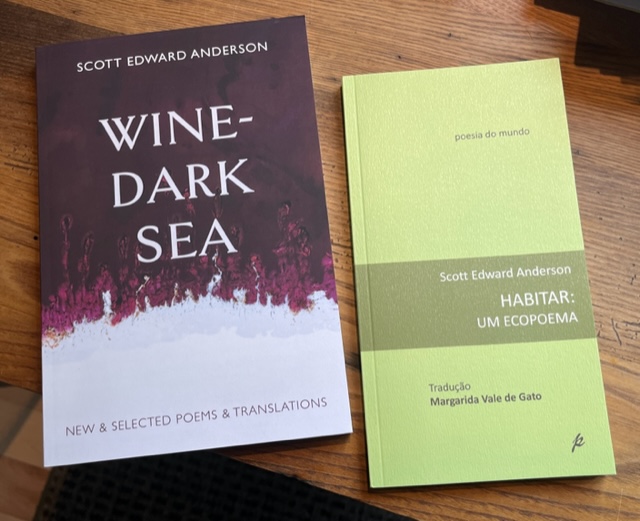
Now is the time, between my birthday and the end of the year, when I take stock of my year in writing. It’s been a pretty productive year, considering it also included a move from Brooklyn to the Berkshires:
Published Wine-Dark Sea: New & Selected Poems & Translations (Shanti Arts)
Book launch for Wine-Dark Sea online with Kathryn Miles (Feb)
Appearance on Portuguese American Radio Hour with Diniz Borges (March)
World Poetry Day/Cagarro Colloquium reading (March)
Book launch with Portuguese Beyond Borders Institute (March)
Book signing at Terrain.org booth at #AWP22 in Philadelphia (March)
Wine-Dark Sea gets “Taylored” by @taylorswift_as_books on Instagram! (March)

Lecture at University of the Azores: Mesa-redonda Poesia, Tradução e Memória (April)
Azores launch for Wine-dark Sea and Azorean Suite/Suite Açoriana at Letras Levadas in Ponta Delgada, São Miguel, Azores, with Leonor Sampaio Silva (April)
Açores Hoje television interview with Juliana Lopes on RTP Açores (April)
Terrain.org Reading Series with Joe Wilkins and Betsy Aoki (April)
“Phase Change” and “Under the Linden’s Spell” reprinted in TS Poetry’s Every Day Poems (online/email)
“Midnight Sun” and “Shapeshifting” reprinted in Earth Song: a nature poems experience (anthology), edited by Sara Barkat and published by TS Poetry Press
Named Ryan Observatory’s first Poet Laureate
Mentored 2 students in Creative Nonfiction for Adroit Journal Summer Mentorship Program (June/July) [UPDATE: one of the students I mentored got accepted into the University of Pennsylvania, early decision! So proud of her!]
Translated Pedro da Silveira’s A ilha e o mundo, his first book of poems (1952)
Excerpts from Corsair of the Islands, my translation of Vitorino Nemésio’s Corsário das Ilhas, published in Barzakh Magazine (online) (August)
Panelist/presenter at Colóquio: Pedro da Silveira – faces de um poliedo cultural, University of the Açores: On Translating Pedro da Silveira’s A Ilha (September)
Lançamento da obra Habitar: um ecopoema, Margarida Vale de Gato’s translation of Dwelling: an ecopoem, published by Poética Edições, with Nuno Júdice, Luís Filipe Sarmento, and Margarida Vale de Gato, at FLAD in Lisbon (September)
Guest lecturer in Creative Writing at University of the Azores (Leonor Sampaio Silva, professora)
Panelist/presenter at 36th Colóquio da Lusofonia, Centro Natália Correia, Fajã de Biaxo, São Miguel, Azores: reading from Azorean Suite/Suite Açoriana with Eduardo Bettencourt Pinto (October)
#YeahYouWrite Catskill Reading at Fahrenheit 451 House, Catskill, NY w/Stephanie Barber, Laurie Stone, and Sara Lippmann (October)
Guest Writer at UConn Stamford creative writing class (Mary Newell, professor) (October)
Poet & Astronomer in Conversation (with Derrick Pitts, Chief Astronomer of the Franklin Institute) at Ryan Observatory at Muddy Run, PA (November)

“Wine-Dark Sea” (poem) published in American Studies Over_Seas (November)
20th Anniversary of residency at Millay Arts and writing of Dwelling: an ecopoem (November) [UPDATE: Got asked to join the Board of Millay Arts in December.]
Selections from Habitar: um ecopoema published in Gávea-Brown (US) and Grotta (Azores)
Book reviews in Gávea-Brown and Pessoa Plural [Postponed until 2023.](December)
My essay, “Açorianidade and the Radiance of Sensibility,” accepted by Barzakh Magazine for publication in Winter 2023 issue. (December)
What a year! I am exceedingly grateful to everyone who has supported my writing over the past year. As Walter Lowenfels wrote, “One reader is a miracle; two, a mass movement.”
Like I said last year, I feel like I’ve been blessed by a mass miracle this year!
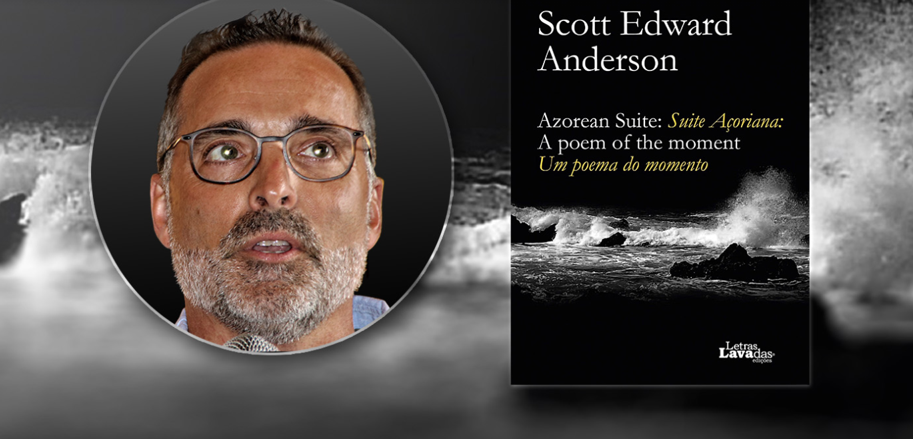
Please join me this Thursday, 3 June, at 7PM EDT, for a reading and talk I’m giving for the New Bedford Whaling Museum, which focuses on the connections between the Azores, New Bedford, and Rhode Island, whaling, and other Atlantic Crossings.
Inspired by my explorations into my family heritage, which in turn inspired my book-length poem Azorean Suite/Suite Açoriana, this reading and talk will explore the journeys of various waves of immigrants to America and their connection across the Atlantic to the Azores.
I’ll share passages from Azorean Suite, as well as from my work-in-progress, a research-driven memoir called “The Others in Me: A Journey to Discover Ancestry, Identity, and Lost Heritage.”
The ZOOM event is past, but you can watch the video here: Whaling Museum
Hope to “see” you there!
My Year in Writing: 2020
November 18, 2020
2020 has been a difficult year in many respects: a global pandemic, over 1.3 million deaths worldwide and climbing, and, here in the U.S., a destabilizing and despicable government response to the pandemic and to escalating racial tensions, as well as a contentious presidential election that threatened the country’s 244-year experiment in democracy.
In short, it’s been tough to find moments to celebrate and, when we do celebrate, it is too often alone, distanced from others, or “together” on Zoom. One response to this “unprecedented” year (may we strike that word from future dictionaries) was to feel paralyzed. And, truth be told, I felt exactly that–paralyzed–for the first few weeks of the pandemic’s surfacing in the U.S.
Shortly, however, I felt that response was not worthy to the challenges–and it didn’t make things better or even make me feel better, as the sirens blared and the death toll rose. Another response was to turn to work, which in my case meant writing. It felt like a choice between surviving and going mad.
Now is generally the time of year—between my birthday and year’s end—when I take stock of my writing life over the past twelve months. This year, I was curious to see how I did. So, here goes:

- Received an award for FALLING UP from Letras Lavadas, in conjunction with PEN Açores, and a Nautilus Award for DWELLING. FALLING UP also received notices from Book Authority for Best New Memoir and Best New Family Books.
- Finished a complete draft of my Work-in-Progress, a research-driven memoir I’m calling THE OTHERS IN ME: A Journey to Discover Ancestry, Identity, and Lost Heritage, and submitted proposal to Tagus Press.
- A chapter from THE OTHERS IN ME, “Steerage,” about my great-grandparents’s journeys from the Azores to America, appeared in VIAGENS, a volume of literary journeys by some of the best Azorean writers writing today (and then there’s my piece), published by Letras Lavadas.
- Finished a long poem, “Azorean Suite,” a section of which appeared in Gávea-Brown: A Bilingual Journal last year, in my original English and in a Portuguese translation by Azorean poet, José Francisco Costa; then I translated the entire poem into Portuguese with Eduardo Bettencourt Pinto, for bilingual book publication as AZOREAN SUITE/SUITE AÇORIANA by Letras Lavadas in Fall 2020.
- Facebook Live with Vamberto Freitas, Katherine Vaz, Eduardo Bettencourt Pinto, and Onésimo Almeida held on 6 Nov and interview in Portuguese-American Journal with Carolina Matos published on the 5th marked the official launch of AZOREAN SUITE/SUITE AÇORIANA. (Watch it here: Launch event)
- Essay, “My Pessoa,” along with translations of two Pessoa poems (including the complete “Tabaccaria,” which I completed this Spring), and three of my own poems with Portuguese themes, will appear in Pessoa Plural in December.
- My foreword to David Swartz’s English translation of Nuno Júdice’s novella, THE RELIGIOUS MANTLE, published in August by New Meridian Arts.
- My essay, “John Fante, Francesco Durante, and Literary Islands,” appeared in Schuykill Valley Journal.
- Poem from my “Providence” sequence, “My Portuguese Grandfather,” published in The Portuguese Tribune. (Thanks Diniz!)
- Contracted to translate Vitorino Nemésio’s CORSÁRIO DAS ILHAS into English for first time, which Tagus Press will publish as part of their Bellis Azorica Series. Started translation and got through and initial draft of the first 10 chapters.
- Translated four poems from DWELLING into Portuguese for a special edition of Colóquio/Letras journal, which Nuno Júdice edits for the Gulbenkian Foundation, on Literratura e ecologia, and to which he asked me to submit.
- Translated five poems of Vitorino Nemésio, submitted to Gavéa-Brown Journal.
- Interviews in Pine Hills Review, with the Portuguese American Radio Hour (look for 07/14/20 episode), and in the Portuguese-American Journal, the last of which was also published in Portuguese on Agenda Açores. I also did a mini-interview for the Letras Lavadas free magazine. And Good Poetry podcast with host Adam Coons! Reviews in Açoriano Oriental for both FALLING UP and SUITE AÇORIANA, and in New Pages blog for DWELLING.
- Participated in Dani Shapiro’s writing retreat at Kripalu (in person, just before the pandemic hit!), participated in “Lusodaisporac” Writing Workshop in June organized by Christopher Larkosh at UMass Dartmouth, took Diniz Borges’s Azorean History and Culture course from Fresno State University (distance), continued my Portuguese language studies, and will participate in Suzanne Roberts’s Travel Writing seminar at end of November. [UPDATE: Participated in Arquipélago de Escritores event in December.]
- Recorded video readings for Tina Cane’s Poetry is Bread, Homebound Publications, and Portuguese Beyond Borders Institute.
And finally updated my website, scottedwardanderson.com, which was long overdue…
…despite everything, not a bad writing year!
[UPDATE: Signed a contract with Shanti Arts for a new collection, WINE-DARK SEA: NEW & SELECTED POEMS & TRANSLATIONS]
Upcoming Readings from Dwelling: an ecopoem — Spring 2019
January 26, 2019
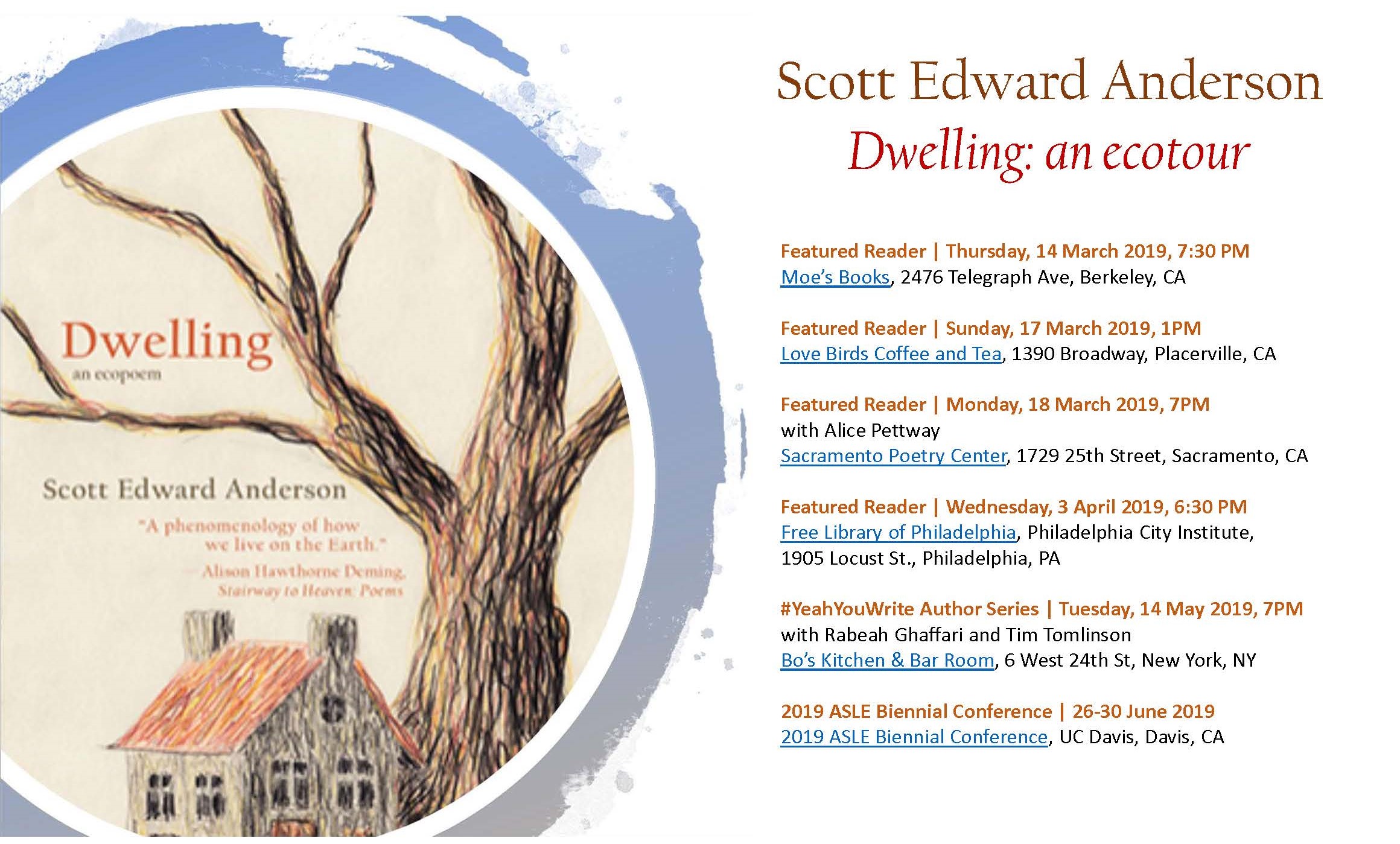
Here’s my upcoming reading schedule for March through June 2019. If you have a reading series you’d like me to be part of or want me to speak to your class or book group, in person or by Skype, please let me know.
Featured Reader
Thursday, 14 March 2019, 7:30 PM
Moe’s Books
2476 Telegraph Ave, Berkeley, CA
Featured Reader
Sunday, 17 March 2019, 1PM
Love Birds Coffee & Tea
1390 Broadway, Placerville, CA
Featured Reader
Monday, 18 March 2019, 7PM
With Alice Pettway
Sacramento Poetry Center
1729 25th Street, Sacramento, CA
Featured Reader
Wednesday, 3 April 2019, 6:30 PM
Free Library of Philadelphia
Philadelphia City Institute,
1905 Locust St., Philadelphia, PA
Featured Reader
Tuesday, 14 May 2019, 7PM
#YeahYouWrite Author Series with Rabeah Ghaffari & Tim Tomlinson
Bo’s Kitchen and Bar Room
6 West 24th St, New York, NY
2019 ASLE Conference
26-30 June 2019
Leading panel “Poetry CAN Save the Earth” and reading from Dwelling: an ecopoem
Paradise on Fire: 2019 ASLE Conference
University of California, Davis
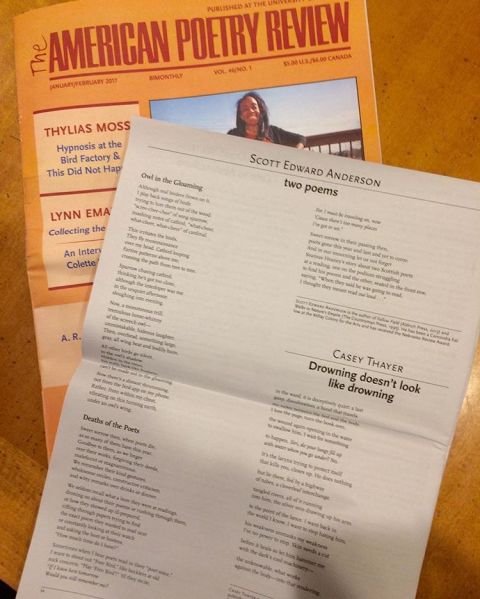
Two Poems by Scott Edward Anderson in The American Poetry Review
Ben Franklin was wrong. Only death is certain; taxes fluctuate — and some even get away without disclosing or paying them.
Last April, my friend the poet A.V. Christie died. It was not entirely a shock, she’d been battling stage 4 cancer for several years, but the fact that she was my age and we’d shared a stage together reading our poems meant it hit close to home.
Four and half months before that, another poet friend, David Simpson, died. I last saw David reading his poems in New York, his book had just come out. He was seriously ill, but celebrating. That was a lesson for me to choose abundance.
Add to that the myriad of more well-known and lesser known poets who die in any given year and it starts to add up: Heaney, Angelou, Kinnell, Waring, Batin, Knott, Strand, Levine, Ritvo, Harrison, Williams, Lux, Tolan, Walcott…the list goes on.
All this death — certain, inevitable death — and a growing number of memorial services and poetry reading “remembrances” over the past few years prompted me do two things: 1.) I started celebrating living poets by acknowledging their birthdays and sharing one of their poems on Facebook; and, 2.) I wrote a poem that tried to shed a little humor on this dark subject.
The poem is called “Deaths of the Poets,” turning on its head the famous Samuel Johnson title, “Lives of the Poets.” I see it as a tribute to the poets who have passed and a kind of companion piece to my poem, “The Poet Gene.”
This poem borrows a few lines from the Lynyrd Skynyrd song, “Free Bird,” which I’ve always wished someone would shout out at one of my readings, as was done at concerts back in the 70s and 80s. (Imagine the lines read in “poet voice,” if you will.)
I threatened to shout for “Free Bird” if my friend the poet Alison Hawthorne Deming didn’t open a recent reading by singing a few bars of “Stairway to Heaven,” which is the title of her new book of poems. She did it brilliantly and I have photo evidence. Alas, no recording.
Here is my poem, “Deaths of the Poets,” which appeared in The American Poetry Review earlier this year:
Deaths of the Poets
Sweet sorrow then, when poets die,
as so many of them have this year.
Goodbye to them, as we linger
over their works, forgiving their deeds,
maleficent or magnanimous.
We remember their kind gestures,
wholesome smiles, constructive criticism,
and witty remarks over drinks or dinner.
We seldom recall what a bore they were at readings,
droning on about their poems or rushing through them,
or how they showed up ill-prepared,
rifling through papers trying to find
the exact poem they wanted to read next
or constantly looking at their watch
and asking the host or hostess,
“How much time do I have?”
Sometimes when I hear poets read in their “poet voice,”
I want to shout out “Free Bird,” like hecklers at old
rock concerts. “Play ‘Free Bird’!” ‘til they recite,
“If I leave here tomorrow
Would you still remember me?
For I must be traveling on, now
‘Cause there’s too many places
I’ve got to see.”
Sweet sorrow in their passing then,
poets gone this year and last and yet to come.
And in our mourning let us not forget
Seamus Heaney’s story about two Scottish poets
at a reading, one on the podium struggling
to find his poems and the other, seated in the front row,
saying, “When they said he was going to read,
I thought they meant read out loud…”
–Scott Edward Anderson
c) 2017 Scott Edward Anderson
First published in The American Poetry Review, Vol. 46, No. 01, January/February 2017

David Simpson reading at NYU CEnter for Creative Writing in December 2014, while his brother Dan records.
I’ve known David Simpson for a dozen years, probably more. We were introduced by another writer in Philadelphia and became fast friends, sharing poems with each other, giving readings together on stages and coffee houses.
Dave was funny, direct, and touching in ways that few other poets were in those days. I mean without being solipsistic or confessional or glib or “clever.”
His work reminded me more of Gerald Stern, David Ignatow, or Frank O’Hara than that of any of his contemporaries. I admired a certain casual freedom he offered in his work.
When Dave, who along with his twin brother, poet Dan Simpson, is blind, contracted ALS recently, it seemed unfair. Here was this most gentle soul, funny and sometimes acerbic, always caring for others, stricken by a crippling and debilitating disease.
Dave and I both agonized over our collections of poetry – for years — and the length of time it took us to compile and find a publisher. Both outsiders in the “poetry biz” world, we had time to refine our collections, sharing poems and encouraging each other – even competing with and inspiring each other.
With the publication of his book, The Way Love Comes to Me, just a few months after my Fallow Field, I was ready to celebrate with Dave. It had been a few years since we’d seen each other, as life changes, moves, and other circumstances would have it. So when Dave read at NYU this past winter, I leapt at the chance to go see him, congratulate him, and hear him read again.
I wasn’t disappointed. Even though I could see he was suffering and the disease was clearly getting the upper hand in the battle, Dave remained the same hopeful, witty, entertaining, thoughtful person I’ve always known.
Yet, as his brother Dan wrote in a recent blog post, “ALS, like other terminal illnesses, forces you to redefine what you mean when you use words like ‘good’ and ‘hope.’ Dave says he can see losses every week. He no longer hopes to perform his one-man show. His idea of a good day has more to do with breathing well, with the help of his by-pap machine, and reading something stimulating than with treks into the city and hosting dinners for friends and family.”
At readings, his poem “Spring Fever,” was always a crowd-pleaser. It’s Dave’s “big hit.” He had to read it or his fans would clamor for it. He probably grew sick of reading it, not wanting to be a one-hit wonder.
When he read it at NYU in December, I immediately wanted to share it with my readers during National Poetry Month this year. Why? Because it has all those qualities I love in Dave and his poetry: humor, pathos, and a beautiful way of rendering tenderness in human interactions.
Here is David Simpson’s poem, “Spring Fever”:
A basketball bounces by the pharmacy as I go in.
Thin music from speakers overhead
mixes with the almost-B-flat hum of neon lights. A cashier,
seeing I am blind, locks her register,
grabs a basket, and leads me by the hand down narrow aisles
as we discuss best buys
on Colgate toothpaste with fluoride,
unscented stick deodorants, and three-roll packs
of two-ply toilet paper. In my ears,
my blood begins to prod: Condoms…condoms
and I say to her: “I need
batteries–four double A’s”
Condomscondomscondoms
“and then, let’s check out the condom display.”
She stands on tiptoes to take down
the box of twelve Latex nonoxynol 9’s,
dips low to read me others that advertise
ribs and dimples, or flavors of mint
and mandarin. “Don’t get the mandarin,” she advises,
her hair brushing my hand as she stands up.
The brand name Excita makes us laugh a little
and I get to talking about Ramses and all his offspring
and what kind of confidence would a name like that
instill in someone looking for birth control?
To nearby customers, it might seem as if
we’re lovers, or very married. I wonder if she…
if we… I choose a pack of Lifestyles; she
puts them in the basket, and for just
a moment before we move
toward the checkout line, they are ours.
c) David Simpson
Used by permission of the author.
PS You can order Dave’s book — and I encourage you to do so — on Amazon.
William Stafford, Rimbaud & the Poet as an Embarrassed Young Man
November 15, 2010

Arthur Rimbaud
Poet William Stafford was a quiet and gentle force in poetry. He liked it that way; at least that’s what he told The Paris Review in 1989. (I think it was published in 1993, the year he died.)
As William Young, the interviewer, wrote in his introduction,
The intimacy of William Stafford’s poetry would seem to belie the enormous popularity the poet’s work has enjoyed, but in fact it is a product of Stafford’s keen ability to discern poetic language in everyday speech and appropriate it for his own work.
Stafford, whose first volume of poetry was not published until 1960 when he was forty-six, was born in the small town of Hutchinson, Kansas, on January 17, 1914 and died in Portland, Oregon, on August 28, 1993 at the age of seventy-nine.
He came to my high school when I was a freshman and read poetry to us. I had been reading the French poet Arthur Rimbaud, in the Louise Varese translation published by New Directions, and was all hopped up about the poet as visionary and seer, about the power of poetic vision on the soul.
So, when it came to the Q&A, I raised my hand and asked, “Mr. Stafford, do you agree with Rimbaud that the the poet must be a visionary?”
It was a brilliant question. I stood there while the entire audience turned around to admire my brilliance.
Then I saw their faces. One classmate in particular, one of the drama students, looked at me incredulously and mouthed something that appeared to be “Rim-bod?!”
Then I realized what I had done. Despite being in my fourth year of French lessons, I had badly butchered Rimbaud’s name, and rather than sounding like “Rambo,” I had made it sound like “Rim-bod.”
My face went red. I sank down into my seat. Humiliated.
Stafford, for his part, very calmly looked at me and answered, “No. I think the poet needs to be able to see the world he or she lives in, but not necessarily be visionary. Paying attention goes a lot longer than vision.”
You can read many of William Stafford’s poems at Selected William Stafford Poetry.

Magpies, Alaska, and my poem “Naming”
July 9, 2010

Magpie by Diane Stiglich (collection of the author).
Almost a decade ago, the Alaska Quarterly Review published a poem of mine called “Naming.” I thought of it today because a good friend mentioned it in a message to me on Twitter. (She had overheard a conversation about magpies I was having with another friend.)
I’m not around magpies much these days, living on the East Coast. I miss them. Magpies, all corvids, really, are a totem for me (bears, especially polar bears are my other totem). Highly intelligent birds with bad reputations, they are a lot of fun.
Gary Snyder once told me and a group of other students that we should find totems for our poetry, “this is the world of nature, myth, archetype, and ecosystem that we must all investigate.” He also told us to “fear not science,” to know what’s what in the ecosystem, to study mind and language, and that our work should be grounded in place. Most of all, he instructed, “be crafty and get the work done.”
Advice that also, curiously enough, reminds me of magpies.
Here is my poem “Naming”:
The way a name lingers in the snow
when traced by hand.
The way angels are made in snow,
all body down,
arms moving from side to ear to side to ear—
a whisper, a pause;
the slight, melting hesitation–
The pause in the hand as it moves
over a name carved in black granite.
The “Chuck, Chuck, Chuck,”
of great-tailed grackles
at southern coastal marshes,
or the way magpies repeat,
“Meg, Meg, Meg”–
The way the rib cage of a whale
resembles the architecture of I. M. Pei.
The way two names on a page
separated by thousands of lines,
pages, bookshelves, miles, can be connected.
The way wind hums through cord grass;
rain on bluestem, on mesquite–
The tremble in the sandpiper
as it skitters over tidal mudflats,
tracking names in the wet silt,
silt that has been building
since Foreman lost to Ali,
since Troy fell — building until
we forget names altogether–
The way children, who know only
syllables endlessly repeated,
connect one moment to the next by
humming, humming, humming–
The way magpies connect branches
into thickets for their nesting–
The curve of thumb as it caresses
the letters in the name of a loved one
on the printed page, connecting
each letter with a trace of oil
from fingerprint to fingerprint,
again and again and again—
Scott Edward Anderson
Alaska Quarterly Review, Summer 2001
Here is an Mp3 recording of me reading “Naming” Live at the Writers House, University of Pennsylvania, on September 22, 2008: Scott Edward Anderson’s “Naming” (Note: there is a 10-second delay at the beginning of the file.)
Postscript: And here is a filmpoem of “Naming” made by Alastair Cook in 2011: Naming
 Scott Edward Anderson
 Scott Edward Anderson's Poetry Blog