Final 5 Questions for Poets
June 13, 2014
 Jonathan Hobratsch, writing in the Huffington Post, celebrated National Poetry Month by posing “5 Questions for Poets” by readers of poetry.
I’ve tried to answer each of his questions (this is the 5th and final). You can find my answers to other sets of questions, here, here, here, and here. Here’s a link to Jonathan’s original Part 5 post and the other poets’ answers: 5 Questions for Poets.
And here are my answers:
1. How hard should you work at a poem?
As hard as it takes to get the poem where it wants to go and get the author out of the way.
2. According to The Atlantic, over 50 percent of people think computers will be able to write great works of literature in 50 years. Do you hold with the majority prognostication?
Great works of literature? I doubt it. But then, when artificial intelligence takes over, great will be defined by a different standard.
3. What would poets like for undergrads to know about poetry?
Poems are pleasure, as Donald Hall wrote in “The Unsayable Said: an essay
4. What interests outside of literature work well with writing poetry?
Many and various interests outside literature work well with poetry, sports, romance, hiking, travel, even work. I found my work with The Nature Conservancy exposed me to so many of nature’s wonders and details that it proved a storehouse of inspiration for my poetry. But even now, when I work for a Big Four firm’s cleantech practice, I’m in one of my most productive periods. It’s all about paying attention.
5. If you were poet during a different era, when/where would you want to exist?
In a workshop long ago Gary Snyder accused me of having a 17th or 18th century sensibility as a poet. So, maybe that’s where I’d find a home. But I’m very happy where I am right here and now.
Yet More 5 Questions for Poets
June 4, 2014
 Jonathan Hobratsch, writing in the Huffington Post, celebrated National Poetry Month by posing “5 Questions for Poets” by readers of poetry.
I’m going to continue to answer these questions (this is Part 3 for me, but out of sequence with the original; you can find my answers to other sets of questions, here, here, and here). Here’s a link to Jonathan’s original Part 4 post and the other poets’ answers: 5 Questions for Poets.
And here are my answers:
1. April 23 was Shakespeare’s 450th anniversary. If you went back in time and could ask him one question, what would that question be?
How the hell did you do it?
2. What bothers you most in your literature community?
That I don’t get to spend more time in it – whether it’s my virtual community “52” or the one where I live in Brooklyn. There are some wonderful poets – wonderful people! – in those communities and I really wish I had more time to hang out with them. In the larger poetry community: careerism, cronysism, and churlishness.
3. Which poets, alive or dead, are overrated/underrated?
I’m sure I’ll offend with this comment but I find Charles Bukowski completely overrated and over-read. And his influence is dreadfully felt. Among contemporaries, I also can’t see what all the fuss is about Dorothea Lasky, there doesn’t seem to be much there there. (I can see the email daggers massing in my in-box or, for that one.)
There are way too many underrated contemporary poets to mention them all, but among the dead Lorine Niedecker, Kenneth Patchen, and Walter Pavlich have always seemed unfairly neglected in my book.
4. Are prizes like Pulitzer, NBA, NBCC are good for poetry. Is there discrimination against women poets, non-white poets, gay poets?
Prizes are for poets, not poetry. It seems like a popularity contest more than anything. I’m sure there is discrimination; you find that wherever there are human beings, cliques, factions, and dominant cultural hierarchies. Others have VIDA stats and ratios to prove it.
5. Is poetry useful?
Poetry is neither as useful as a tool nor as useless as a whim. Of course, I couldn’t live without it.
5 More Questions for Poets
May 6, 2014
 Jonathan Hobratsch, writing in the Huffington Post, celebrated National Poetry Month by posing “5 Questions for Poets” by readers of poetry.
I’m going to continue to answer these questions (this is Part 2 for me, but out of sequence with the original; you can find my answers to Part 1, here). Here’s a link to Jonathan’s original post and the poets’ answers: 5 Questions for Poets, Part 3.
And here are my answers:
- How many of your poems do you throw away?
I believe, as Paul Valery wrote, “A poem is never finished, only abandoned.” I never throw them away. Sometimes I find lines that are useful elsewhere or I work on them and find a way to let them get where they need to go over a period of years.
Of course, there are many, many that will never find their way and will never see the light of day. I want only those poems that I have “finished” or “abandoned” to represent my work in the world. I’ll be lucky if even one or two survive beyond my lifetime.
- Do you still get poems rejected in poetry journals?
All the time. The ones that hurt the most are the seemingly annual rejections from The New Yorker, POETRY, Ploughshares, The Gettysburg Review, all places where I really want to publish someday, but others as well. I try to move on quickly and send them out again. If a poem gets rejected more than a few times, I’ll pull it out of circulation and take another look at it. I’ve been fortunate to be published in some very fine places, in print and online.
- How many poems do you have memorized?
Only one, I think. “One Art” by Elizabeth Bishop. Oh, and parts of others. I was never good at memorization. I have too much poetry working in my head and my filing system is only big enough for what I’m working on. Although, I did recite Whitman’s “O Captain, My Captain,” when I was nine.
- Are creative writing programs good or bad for literature? Why?
Good and bad. At its best, a creative writing program will encourage writers to hone their craft and voice, to improve their work through revision and paying attention to what a poem needs. At worst, it is a breeding ground for poetry careerism and cronyism and mimicry of the worst sort.
Of course, when I asked Robert Hass whether I should get an MFA, he, in turn, asked me, “Do you want to teach?” I cheekily answered, “No, I don’t think you can teach writing poetry.” He told me to go out and get a real job, to experience life and have something to write about other than academic life, and that has made all the difference to me.
- Do you think the Best of American Poetry, or Best Poems of 20__ and the Pushcart annual are useful indices of the best work now being published?
Obviously not, they’ve never included any of mine – not even some of my better efforts, like “Naming” and “Fallow Field.” The latter was nominated for a Pushcart, but as the title poem of my collection published last fall, not in the year it was published in Blueline.
In all seriousness, these lists or time-sensitive anthologies represent the opinion, taste or whims of an individual or a series of individuals; the editor of the anthology, etc, and those who chose the poems for publication in the first place. Nothing more; nothing less.
5 Questions for Poets
April 2, 2014

I Saw the Figure 5 in Gold, 1928, Charles Demuth (American, 1883–1935)
Jonathan Hobratsch, writing in the Huffington Post, celebrates National Poetry Month by posing 5 questions by readers of poetry to some of the “top poets” writing today. Alfred Corn posted the questions to his friends on Facebook.
Here are my answers:
1. Do the Internet and social media contribute to the well-being of poetry?
On the plus side, my work has reached audiences beyond the reach of traditional publishing venues, and I’ve met and been exposed to poets from around the world whose work I could not have otherwise found. My community of poets has grown and challenged my work in new and fascinating ways.
2. What do most poorly-written poems have in common?
Language or structure that doesn’t serve the poem. Over-writing or lazy writing. Sentimentality. Lack of music. Basically, when it’s clear the poet hasn’t listened to the poem.
3. What do most well-written poems have in common?
They sing. They make you dance. And they give you a new way of looking at the world.
4. How important is accessibility of meaning? Should one have to work hard to “solve” the poem?
Poetry should be neither a Rubik’s cube nor a road sign.
5. What book are you reading right now?
All Standing: The Remarkable Story of the Jeanie Johnston, the Legendary Irish Famine Ship by Kathryn Miles; The Old Ways: A Journey on Foot by Robert McFarlane; Orr: My Story by Bobby Orr; and Navigation by Jo Bell.
Here’s a link to the original article: 5 Questions for Poets
30 Poems for National Poetry Month: Day 30
April 30, 2013
This has been an experiment. Although I try to write every day, I have never posted my daily scribblings for the world to see.
This year, in addition to my weekly emails and post for National Poetry Month, I took up the challenge of writing a poem each day to see what I could do.
When you are your own harshest critic, it’s hard to post what you know isn’t ready. Unvarnished, at times raw emotionally and in terms of craft, the poems are here to speak for themselves.
I must thank you, my readers, for your indulgence and your loyalty. Some of you have offered comments and feedback for which I am grateful; others have simply “liked” an individual poem or post, which is also encouragement.
Through it all, I must thank my partner Samantha, for both inspiring me and being patient with my almost poetry diary, which put our life and love on public display.
I’m looking forward to printing out these poems so I can look at them on the page — as a group and individually — and see what comes of them. Let the real work begin!
Here is my poem for Day 30:
And so it ends, this Month of Poetry,
Not with a band, but with a whisper.
Although I wanted to kill that mockingbird
This morning, with his incessant trilling,
Which would have caused excitement,
And made our morning a tad more thrilling.
My love held close to me in the kitchen,
As we were making breakfast,
Her curves beautifully accentuated
In her tight-fitting nightgown.
The kettle whistled, as did I,
When she looked at me so longingly,
And curved her body up to mine.
Ah, if only we had the time
This morning, but the month has come
To an end. Tomorrow we begin again,
Perhaps with fewer daily posts,
But no less poetry in our lives.
–Scott Edward Anderson

30 Poems for National Poetry Month: Day 29
April 29, 2013
Here is my poem for Day 29:
The penultimate day of Poetry Month,
My challenge nearly over.
I’d no idea how much poetry
Would cascade out this month,
Or with so much love therein
Or how easy it would flow–
Of course, time will tell
How much survives,
Revision has always been
The real work to me.
Yet, if one or two live
To tell the tale I have here told,
It was a grand experiment
And one that achieved its goal.
–Scott Edward Anderson
30 Poems for National Poetry Month: Day 28
April 28, 2013
Here is my poem for Day 28:
Breakfast on the deck in the morning sun.
Spinach-feta-egg-white omelette,
The last of the rosemary bread toasted,
French-pressed coffee, the Times.
Proving to ourselves at least,
Civilized life can continue,
Even with the hoard of kids
(The smallest perfect number)
Looming in their beds.
–Scott Edward Anderson

30 Poems for National Poetry Month: Day 27
April 27, 2013
Here is my poem for Day 27:
That’s an unattached male
Mockingbird who sings
At 3AM, hidden somewhere
In the magnolia behind our
Building. He wants a mate.
I’ve got a mate, lying next to me,
And she rolls over and remarks
About the bird, asks why
He is singing now, before dawn.
It’s a strategy mockers have developed,
Taking advantage of silence,
As if in competition with the night.
Waiting will not do for the mocker,
Who has already stolen other birds’
Songs, he now wants to win
A heart of his own–
What he doesn’t realize is
It’s as annoying to the females
As it is to us trying to sleep.
–Scott Edward Anderson

 Writing for posterity may be as old as writing itself. Poets, novelists, essayists, and philosophers all write with the hope that their work will survive them — even if they deny it — living on to touch new readers in distant ages.
Some writers never lived to see their work gain an audience or even a small, devoted readership. Some, like Robert Browning, obsessed about it.
Alas, the quote from Walter Lowenfels that adorns this blog is a daily reminder to me of the fate of almost all of us.
How much of our writing will survive, will last, will live to find readers throughout our lifetime and beyond?
I was struck by this question twice this week.
The first was Tuesday night, having dinner with twin brother poets Dan and David Simpson. We were talking about the fact that none of the three of us had published collections of our work, despite “success” placing individual poems in journals and magazines, and the awards and accolades we’ve received over the years.
David told of an encounter with a writing mentor who reviewed his draft manuscript. The mentor suggested they each go through the script and rate the poems numerically: 1, 2, 3; then they would compare the results and see what came of it.
My friend was dumbfounded that the mentor found so few 1s among the collection — really only a few — and only a few 2s as well. The 3s weren’t even worth mentioning and probably should be discarded, suggested the mentor.
Bruised as David’s ego was by the experience, I found some solace in it.
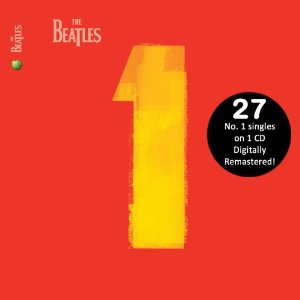
“How many #1 singles did The Beatles have?” I asked David. (27 is the answer.)
“So, okay, we can agree that none of us are The Beatles,” I offered. “But we could be, say, The Guess Who.” (That group had only had one number 1 single, “American Woman,” for three weeks May 9 -29, 1970, yet we all know the song and you probably have it streaming in your head right now at its mere mention.)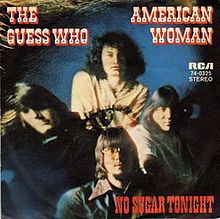
We agreed that we would be lucky to have one “hit” poem continue to be read by people after our deaths. We’d be delighted if a handful survive us, yet it’s helpful to have some perspective.
A few days later I received a request for permission to reprint a piece of writing I did in 1993. This is the most widely reprinted thing I’ve written and, I’m afraid, will likely survive any and all of my creative work.
The piece is a review of N. Scott Momaday‘s In the Presence of the Sun: Stories and Poems, 1961-1991
It’s even been made available for students on such services as eNotes: Scott Edward Anderson (review date 1993).
I re-read the piece this morning — it’s not a bad piece of writing, as reviews go, and certainly lives up to eNotes’ description: “Anderson provides a thematic and stylistic review of In the Presence of the Sun.”
Yet, when I wrote the review, I never imagined it would be my most cited, most reprinted, perhaps even my most read piece of writing.
If only the strong survive may this piece rock on.

“Build What You Love”: The Search for the Perfect Poetry App
August 13, 2011

City Lights Books' Pocket Poets Series made poetry portable.
I started this post back in October, before becoming aware of quite a number of Poetry Apps for smartphones — that’s what I get for being stuck with a BlackBerry Storm, which sucks at storing apps and is so bad that no one in their right mind would write an app for it much less have one…er…ah…yeah.
Anyway, I’ll amend this post at the end with a few links to good lists of apps, which you can try if you are an iPhone or iPad user or perhaps even an HTC or Android user. At some point, I’ll join you. Here’s what I wrote in October:
My pal Andy Swan had a lively dialogue recently that I overheard on Twitter. He was talking about letting innovators innovate and not be beholden to some altruistic standard that dictates what they should work on.
(Microlending site Kiva.org is wrestling with this question, too, as they recently admitted their main competitor is, well, “Farmville,” the game where you can waste time tending a virtual farm instead of helping Kiva build real farms.)
Anyway, one of Andy’s points was about whether innovators should focus on solving societal ills or focus on solving problems that gnaw at them.
“What if Edison[‘s] not being able to read at night is not a legitimate problem while others starve,” Andy wrote.
He went on to say, “Innovators should build what they love. The market will distribute.”
I wondered what I would build if I were to just build what I love. And it got me thinking. I would love to build a new way of distributing poetry; one that makes it easy, portable and enjoyable for people.
What I’m thinking is something between and app and a book. As transformational as City Lights Books‘ Pocket Poets series, only with better design and more consistent, high quality poetry.
Of course — like my idea from over a decade ago for a poetry cable TV channel — there’s no money in it. Would that my interests were more like the virtual corruption you can participate in on “Mafia Wars,” but there it is.
I mentioned the idea to a dear friend of mine who said that perhaps I’m wrong; maybe there is a market for it. Not a huge market, perhaps, but certainly more than just a handful.
What features would you want in such an app, device, or “book”? Searchable index by poet, title, first line, assumed first line, theme, occasion, time-period, style?
It wouldn’t have to be a huge amount of storage on a device or would it? Could it be in the cloud and accessed via the cloud? Would you have to build in incentives for people to continue using it, contests, triva, etc.?
I’m just throwing this out there and will wrestle with it down the road. I may even pull together a Survey Monkey to gauge the interest need for features, and where the money is going to come from.
Well, it turned out there are quite a few apps out there already, so my idea was a little late in the game. Here are some links to some lists of apps you may want to explore:
Quick Access to Poetry in the Age of Technology (NY Times)
An essential poetry app as addictive as raspberries (Poetry Foundation)
Poetry Apps (Randall Weiss blog)
Poetry Apps (Emerging Writer blog)
Apps for Poets (App Advice b log)
A New Poetry App for the iPhone (Brian Spear)
I like what Spear, a poet and editor of The Rumpus, says in that last post about his ideal poetry app (back in May of 2010!):
The poetry app of my dreams is an aggregator, one that scans the web daily for new publications and then pulls them into a reader. It would need to push traffic to the online journals of origin and would have to include a way to limit the places you receive poetry from–maybe set it up so that the user gets a poem from a place and then decides whether or not to receive future updates from that journal. Swindle is a start toward that on the web, but I haven’t found anything like that for the iPhone yet.
Has that need been met? Do you have a poetry app you recommend? Do you want to build one with me? What would you build if you could build what you love?
 Scott Edward Anderson
 Scott Edward Anderson's Poetry Blog