National Poetry Month 2026, Week Two: Patricia Smith’s “Annie Pearl Smith Discovers Moonlight”
April 10, 2026
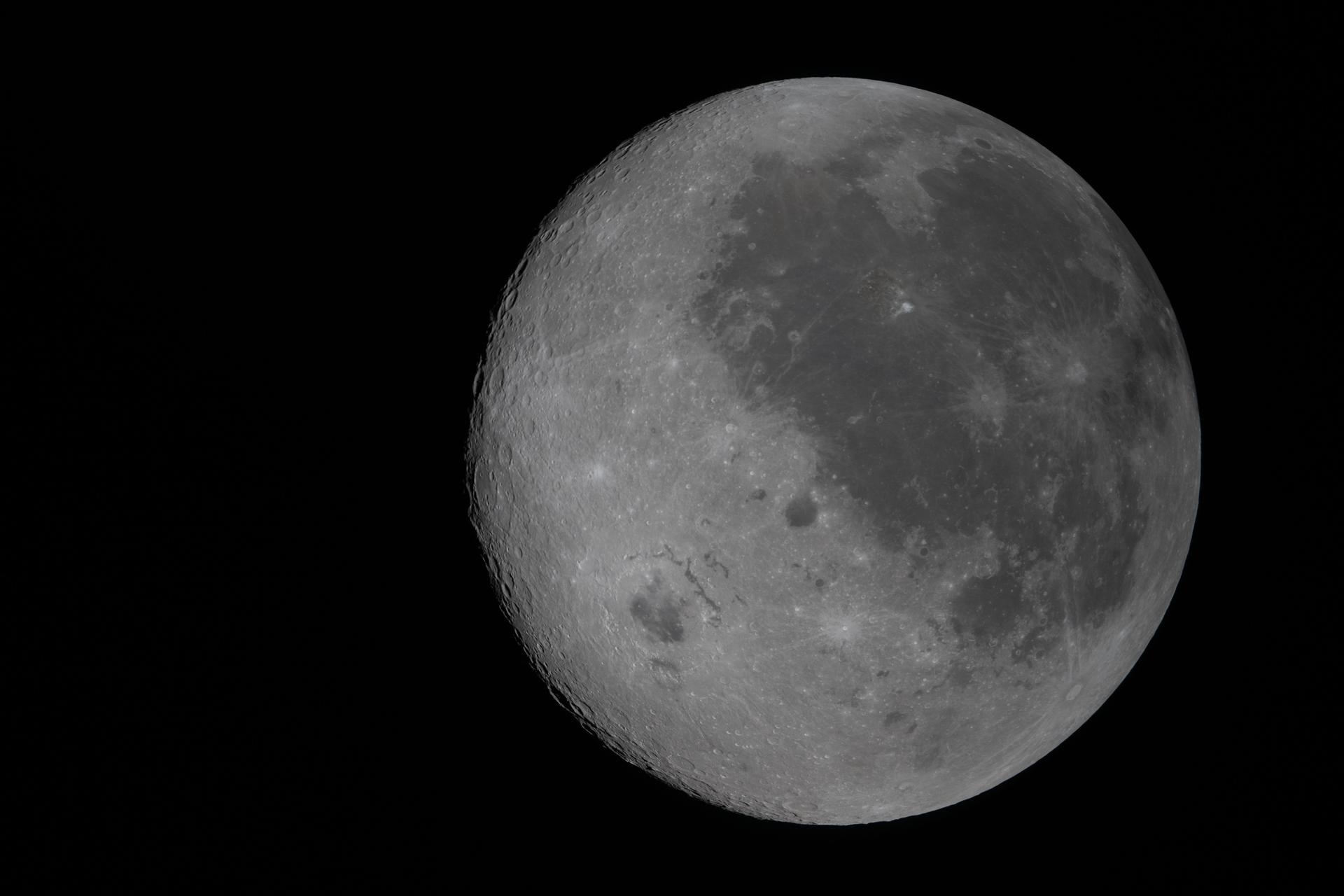
This week, for the first time in more than fifty years, human beings flew around the moon. NASA’s Artemis II crew—Reid Wiseman, Victor Glover, Christina Koch, and Jeremy Hansen—completed a historic lunar flyby on April 6, setting a new record for the farthest distance from Earth any human has ever traveled. Tonight, they will return to Earth, with splashdown scheduled for 8:07 PM ET.
During their pass around the far side, the astronauts photographed surface features rarely or never seen by human eyes, with shadows stretching across crater rims in ways that reveal depth and texture invisible under full illumination. The images they sent back are extraordinary. And yet, even now, even with all of it—the high resolution, the data, the technology that Apollo could not have imagined—the moon retains something that resists explanation. Some quality of wonder that better pictures only deepen.
I’ve been thinking about that wonder all week, and of this poem by Patricia Smith, which is about her mother, the moon, and so much more. Smith is one of the most important poets working in America today. Her most recent collection, The Intentions of Thunder: New and Selected Poems (Scribner, 2025), won the 2025 National Book Award for Poetry. She is a recipient of the Ruth Lilly Poetry Prize for Lifetime Achievement, a Guggenheim fellow, an inductee of the American Academy of Arts & Sciences, and a four-time individual champion of the National Poetry Slam.
Smith’s work has always moved between the intimate and the historical, between the body and the world, finding in one the precise shape of the other. “Annie Pearl Smith Discovers Moonlight” does something equally, quietly devastating: it inhabits the perspective of a Black woman in 1969 who doesn’t believe men have landed on the moon.
Her mother, the Annie Pearl of the title, isn’t superstitious or uninformed. She is a woman who has been deceived before, by men, by the country, by the ordinary promises of ordinary life. She worked for twenty years in a candy factory and counted out her dollars—presumably for the collection plate—with the expectation of a heavenly reward. For heaven to be real, she knows, it can’t be touched, named, walked upon. It can’t be the “ten o’clock news.”
What makes the poem so remarkable is that the poet refuses to condescend to Annie Pearl, even as her 13-year-old self, sitting across the dinner table—her foot kicked gently beneath the table by her father to conspire or keep her quiet or both—feels the thrill of the moon landing unraveling inside her. Both women hold something true: the moon is both the cold rock beneath Armstrong’s boot and the luminous, unreachable promise the older woman has been clutching all her life.
That tension, between the empirical and the sacred, between what science can photograph, count, analyze and yet can’t contain, is exactly what I find myself sitting with this week, of all weeks, as new images of the lunar surface arrive, a crater gets named for the late wife of one of the crew, the astronauts head home full of awe, and the moon hangs above us, old and new at once. Like after the original lunar landing, we will never see the moon the same way again.
Here is Patricia Smith’s “Annie Pearl Smith Discovers Moonlight”:
My mother, the sage of Aliceville, Alabama,
didn't believe that men had landed on the moon.
“'They can do anything with cameras,”
she hissed to anyone and everyone who'd listen,
even as moonrock crackled
beneath Neil Armstrong’s puffed boot.
While the gritty film spun and rewound and we
heard the snarled static of “One small step,”
my mother pouted and sniffed
and slammed skillets into the sink.
She was not impressed.
After all, it was 1969, a year fat with deceit.
So many miracles
had proven mere staging for lesser dramas.

But why this elaborate prank
staged in a desert “somewhere out west,”
where she insisted the cosmic gag unfolded?
“'They are trying to fool us.”
No one argued, since she seemed near tears,
remembering the nervy deceptions of her own skin—
mirrors that swallowed too much,
men who blessed her with touch only as warning.
A woman reduced to juices, sensation and ritual,
my mother saw the stars only as signals for sleep.
She had already been promised the moon.

And heaven too. Somewhere above her head
she imagined bubble-cheeked cherubs
lining the one and only road to salvation,
angels with porcelain faces and celestial choirs
wailing gospel brown enough to warp the seams of paradise.
But for heaven to be real, it could not be kissed,
explored,
strolled upon
or crumbled in the hands of living men.
It could not be the 10 o’clock news,
the story above the fold,
the breathless garble of a radio “special report.”

My mother had twisted her tired body into prayerful knots,
worked twenty years in a candy factory,
dipping wrinkled hands into vats of lumpy chocolate,
and counted out dollars with her thin, doubled vision,
so that a heavenly seat would be plumped for her coming.
Now the moon,
the promised land’s brightest bauble,
crunched plainer than sidewalk beneath ordinary feet.
And her Lord just lettin’ it happen.

“Ain’t nobody mentioned God in all this,” she muttered
over a hurried dinner of steamed collards and cornbread.
“That’s how I know they ain’t up there.
Them stars, them planets ain’t ours to mess with.
The Lord woulda showed Hisself if them men
done punched a hole in my heaven.”
Daddy kicked my foot beneath the table;
we nodded, we chewed, we swallowed.
Inside me, thrill unraveled;
I imagined my foot touching down on the jagged rock,
blessings moving like white light through my veins.

Annie Pearl Smith rose from sleep that night
and tilted her face full toward a violated paradise.
My father told me how she whispered in tongues,
how she ached for a sign
she wouldn’t have to die to believe.

Now I watch her clicking like a clock toward deliverance,
and I tell her that heaven still glows wide and righteous
with a place waiting just for her,
fashioned long ago by that lumbering dance
of feet both human and holy.
—
Patricia Smith’s “Annie Pearl Smith Discovers Moonlight” originally appeared in AGNI 36 (1992) and in Big Towns, Big Talk (Zoland Books, 1992); and, most recently, in The Intentions of Thunder: New and Selected Poems (Scribner Poetry, 2025).
 Scott Edward Anderson
 Scott Edward Anderson's Poetry Blog